
Ben Powers Net Worth 2026: The Honest $1–$1.5 Million Estimate Behind Good Times’ Keith Anderson
Ben powers net worth was reported at $1 million to $1.5 million at the time of his death in 2015 — and that modest, narrow range is the honest answer. Alton Adelbert Powers, the actor the world knew as Ben Powers, was best known as Keith Albert Anderson, the professional football player who married Thelma Evans in the sixth and final season of the CBS sitcom Good Times. He worked in Hollywood for less than a decade, left acting in the mid-1980s, and lived the last thirty years of his life far away from the cameras. No reputable financial publication ever audited his fortune, and no salary, contract value or estate record from his career was ever made public.
The low end of the range comes from Rachel Parris, which listed ben powers net worth at $1 million, while Celebrity Birthdays put the figure at $1.5 million. One weaker page claimed $5 million, but it also wrongly stated that he died of a heart attack, so its figure carried no weight. This article will not pretend any of those numbers was a verified fact. Instead, it explains what was documented about his short career.
Unlike the aggregator pages that copy one another’s guesses, this article separates what was documented from what was estimated. His birth in Brooklyn on 5 July 1950, his upbringing in Providence, his training at the Rhode Island School of Design, his regular spots on Laugh-In and Good Times, his film roles, his regular role on Mickey Spillane’s Mike Hammer, and his death from liver cancer on 6 April 2015 are matters of public record. His earnings, savings, investments and property holdings were not. Where a number was an estimate, this article says so and names the source.
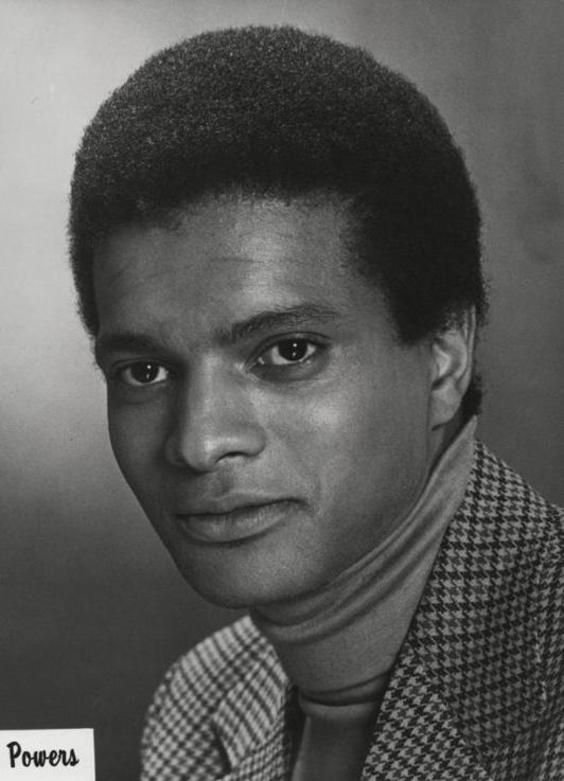
Table of Contents
Ben Powers Net Worth: The Honest Estimate
The most responsible way to state ben powers net worth is as a narrow range, not a single number. The published estimates ran from $1 million at the bottom to $1.5 million at the top, and every one of them was an educated guess built from his visible career rather than from any disclosed financial record. Powers never discussed his earnings in an interview, had no public company with published accounts, and filed no financial disclosure that would let anyone verify a figure.
Rachel Parris listed ben powers net worth at $1 million, while Celebrity Birthdays listed it at $1.5 million, describing him as one of the richest television actors from the United States. A third page, NCESC, claimed $5 million, but the same page wrongly reported that he died of a heart attack, when his death was in fact caused by liver cancer, so its number could not be trusted. No major financial outlet — not Forbes, not Celebrity Net Worth, not any established wealth tracker — ever published a figure for him at all.
Why did the numbers stay so small, and why did they disagree so little? Because Powers’ earning window was genuinely short. He was a working television actor for roughly eight years, from his Laugh-In debut in 1977 until he left acting in the mid-1980s. He never headlined a show, never carried a film, and never built the kind of catalogue that keeps paying long after the work stops. A fortune of $1 million to $1.5 million was entirely consistent with a supporting actor who worked steadily for a few years on network television in the late 1970s and early 1980s, and then stopped.
There was one more reason to treat every figure in the range with care. The sites that published these numbers were biography aggregators that produced near-identical pages about hundreds of celebrities, with the same page structure and the same round-number estimates. That pattern was a sign of content produced at scale from other aggregator pages, not of fresh reporting. The $1.5 million figure was not impossible, but no evidence was ever published to support it, and the sites repeating it offered none.
Readers should also ignore one figure that still circulates online. Some recent AI-written pages claimed a “Ben Powers” was worth $320 million to $360 million as a Superman actor. That was fiction. Powers never played Superman, never appeared in a DC film, and died in 2015, years before the modern Superman films were cast. The pages confused him with a different, younger actor, and their numbers belonged to nobody at all. The real ben powers net worth was the modest $1 million to $1.5 million range, and this article uses only that.
Ben Powers Quick Facts
| Detail | Information |
|---|---|
| Full name | Alton Adelbert Powers |
| Date of birth | 5 July 1950 |
| Birthplace | Brooklyn, New York, United States |
| Raised in | Providence, Rhode Island |
| Date of death | 6 April 2015, aged 64 |
| Place of death | New Bedford, Massachusetts, United States |
| Cause of death | Liver cancer |
| Nationality | American |
| Profession | Actor and comedian |
| Known for | Keith Albert Anderson, Thelma’s husband, in Good Times (1978–79) |
| Estimated net worth | Approximately $1 million–$1.5 million, according to published estimates; no verified figure existed |
| Television | Laugh-In (1977–78), Good Times (1978–79), Mickey Spillane’s Mike Hammer (1984–85) |
| Films | Cheech and Chong’s Next Movie (1980), Things Are Tough All Over, The Man Who Loved Women |
| Education | Rhode Island School of Design (painting and sketching) |
| Spouse | Julia Harper (married 1981; died 2012) |
The biographical facts in this table were documented by Wikipedia, The Hollywood Reporter and his obituary records. The net-worth line was an estimate drawn from the published range, not an official financial record.
Why the $1 Million Figure Was Easy to Defend
The lower end of the ben powers net worth range was easier to defend than the top, because it asked for the least. A figure of $1 million was consistent with a supporting actor who earned network television pay for a handful of years and then left the business. Powers was never a celebrity endorser, never sold a product line, never launched a business, and never became a social-media personality with a merchandise operation. His income came from acting fees, split across a short career, and then it stopped.
That short career mattered. A supporting player on a sitcom in the late 1970s earned a per-episode fee, not a share of the show’s profits. Good Times ran for six seasons, but Powers appeared in only the last one — 24 episodes. Syndication money flowed mainly to the show’s creators, producers and long-running leads, not to an actor who joined for a single season. Whatever he earned from those 24 episodes was a salary, paid once.
Why the $1.5 Million Figure Kept Appearing
The case for the higher end of the ben powers net worth range rested on a simple idea: even a short network career, well managed, could build more than $1 million. Powers worked steadily from 1977 to 1985. If he saved diligently, lived modestly in New England after leaving Hollywood, and invested carefully over the thirty years that followed, $1.5 million was arithmetically possible.
It was also worth noting how the figure travelled. Celebrity Birthdays listed $1.5 million, Rachel Parris listed $1 million, and neither site explained how its figure was calculated or showed any reporting of its own. When two low-authority sites disagreed by $500,000 between themselves, that disagreement was itself evidence that neither of them knew.
What Would Have Settled the Number
Nothing short of a disclosure from Powers himself, or from his estate, would have settled the number to a single figure. He never gave one, and there was no reason to expect him to. A supporting actor had no occasion to talk about his money, and Powers kept his finances entirely private throughout his life. No probate record, property filing or estate valuation was ever published.
Readers should therefore treat the $1 million to $1.5 million range as the answer, with $1 million as the cautious floor and $1.5 million as the most commonly quoted ceiling.
How Ben Powers Made His Money
Powers’ income never came from one source. Over roughly eight working years he earned as a sketch-comedy regular, as a sitcom supporting player, as a film actor in small roles, as a regular on a detective drama, and as a guest star on popular network shows, with stand-up comedy and stage work underneath it all. That structure explains both why ben powers net worth stayed modest and why it was so hard to pin down.
None of those income streams came with public figures. No episode fee, film salary or guest-spot payment was ever published for him, and this article will not invent one. Each stream paid once, at the time of the work, and none of them kept paying for decades afterwards.
1. Laugh-In — The First Network Paycheque
Powers’ first regular television work came on NBC’s Rowan & Martin’s Laugh-In, where he was a cast member in the 1977–78 season and appeared in six episodes. Laugh-In was a sketch-comedy institution, and a regular spot on it was a genuine break for a young comedian who had been performing stand-up and impressions in Providence clubs. The pay for a sketch performer was a weekly network fee, not a star salary, but it was steady work on national television, and it put him in front of casting directors.
On Laugh-In he performed sketches alongside established stars, including Robin Williams and Bette Davis, and he showed the comic timing that later made his Good Times talent-show scenes work. For the full biographical record of his career, see the Ben Powers Wikipedia page.
2. Good Times — The Role That Defined Him
Good Times was the biggest paycheque of Powers’ career, and it was also the shortest. He joined the CBS sitcom for its sixth and final season in 1978, playing Keith Albert Anderson, a professional football player who married Thelma Evans, played by Bern Nadette Stanis. He appeared in 24 episodes, which made him a main cast member for that season — but only for that season.
He was paid per episode, and when the season ended, the pay stopped. The show went on to a long life in syndication and reruns, but the syndication windfall belonged to the producers and the long-running stars. Powers’ 24 episodes gave him a famous character, not a fortune. The same arithmetic applied to other one-season sitcom performers — a short, well-paid run could build a comfortable sum, as the career behind A Chal net worth shows in a different era of the music business, but it could not build lasting wealth on its own.
What the role did give him was permanence. Keith Anderson was written into the show’s final act in a memorable way: he tripped over J.J.’s foot on his wedding day and suffered a career-ending knee injury, then fought his way back until the Chicago Bears offered him a contract. The character’s story ended with Keith and a pregnant Thelma moving into a luxury apartment in Chicago’s Gold Coast district. Audiences remembered the character long after the show ended, and that memory was the reason people kept searching for ben powers net worth decades later.
3. Feature Films — Small Roles, One-Off Fees
In the early 1980s Powers appeared in a handful of big-screen films, mostly in smaller supporting roles. His film debut came in Cheech and Chong’s Next Movie in 1980, where he played a character credited as Welfare Black. He went on to appear in Things Are Tough All Over and The Man Who Loved Women, along with a number of made-for-television movies.
Film work paid differently from television. A supporting film role was a one-off fee, negotiated per picture, with no weekly salary and no residuals of any size for a small part. His film career was a useful supplement to his television earnings, not a second fortune.
4. Mickey Spillane’s Mike Hammer — The Last Regular Role
Powers’ most significant role after Good Times was as Mose Gunn, usually called Moochie, in the CBS detective drama Mickey Spillane’s Mike Hammer, starring Stacy Keach. He was a series regular in 1984–85, and the role gave him something Good Times had not: a second steady paycheque, several years after his sitcom fame had faded.
The run ended for reasons that had nothing to do with him. Keach was arrested in London for cocaine smuggling, and the show was cancelled while Keach served time in England. He left acting at the end of 1985, according to The Hollywood Reporter’s obituary account, and he never took another regular television role.
5. Guest Spots, Stage Work and Stand-Up
Around his regular roles, Powers filled his diary with guest appearances on popular shows of the era, including Gimme a Break!, Laverne & Shirley, The New Odd Couple, The Greatest American Hero, Flamingo Road and The Love Boat, plus a part in the PBS film Brother to Dragons. Each guest spot paid a single fee.
Underneath the screen work sat his first trade. Before Hollywood, he had performed stand-up comedy routines in Providence, built around impressions — Tony Bennett and Johnny Mathis were among the voices he copied — and songs, including standards and original music he wrote himself. He performed at Playboy Clubs in New York, Los Angeles and Boston, and it was a Hollywood agent who discovered him during those club dates. Stage and club work paid modestly, but it was the work that got him discovered.
Early Life and Education
Alton Adelbert Powers was born on 5 July 1950 in Brooklyn, New York, and was raised in Providence, Rhode Island. The city shaped him twice over: it gave him his schooling, and it gave him his first stage. He attended the Rhode Island School of Design, where he studied painting and sketching, and he remained a painter and sketch artist for the rest of his life.
That artistic training mattered to the story of ben powers net worth because it explained the shape of a career that never quite fitted the Hollywood pattern. Powers was not a child actor chasing fame from his teens. He was a working artist from Providence who came to acting sideways, after an injury ended his hopes of a football career.
His first theatre break came at the Trinity Repertory Theatre in Providence, under Adrian Hall. From there he moved into stand-up, singing and impressions in local clubs, and he built the act that a visiting Hollywood agent eventually noticed. He sang in the choir at the First Tabernacle Pentecostal Church as a boy, and music stayed in his act: he sang standards and songs he wrote himself, alongside the impressions that made club audiences laugh.
Little was publicly known about his parents, and Powers kept his family background out of interviews. No reliable source named his parents or described their occupations, and this article does not repeat the speculation that appeared on low-authority biography sites. What was documented was that his family supported his move from art school to the stage, and that he built his skill the practical way — in a rehearsal room, in a comedy club, and on stage.
One detail from his early life deserved care. Some weaker sources gave his birth date as 13 February 1950, or even 1949, and one registry listed him as born in Yonkers. Wikipedia, his obituary records and the majority of biographical sources agreed on 5 July 1950 in Brooklyn, and this article used that date throughout.
Career Journey
The career behind ben powers net worth was short, bright and unusually varied for a supporting actor. Powers moved from sketch comedy to a landmark sitcom to feature films to a detective drama in the space of eight years, and then he stopped. The journey below follows that path from a Providence comedy club to the final season of Good Times and back to New England.
1977–78: Laugh-In and the Breakthrough
Powers’ national breakthrough came on Laugh-In, where he was a regular performer in the 1977–78 season. The show was past its late-1960s peak by then, but it was still a national platform, and a regular spot on it meant that casting directors across Hollywood knew his name. He appeared in six episodes, performing sketches and showing the comic timing that had made his Providence club act work.
The break led directly to his next job. Within a year of his Laugh-In debut, Powers was cast in the role that defined his career.
1978–79: Good Times and Keith Anderson
In 1978 Powers joined the cast of Good Times for its sixth and final season, playing Keith Albert Anderson. The show, created by Eric Monte and Mike Evans and developed by Norman Lear, had aired on CBS since 8 February 1974. It was television’s first African-American two-parent family sitcom, and it had been a fixture of American television for five years before he arrived.
He arrived at a moment of change. John Amos had left after the third season, Esther Rolle had departed and then returned, and the producers filled the gap with new characters, including Powers as Thelma’s husband and Janet Jackson as Penny, an abused girl adopted by Willona. Keith was a professional football player, and his wedding to Thelma opened the season in the four-part episode “Florida’s Homecoming”.
The wedding itself became one of the season’s most remembered scenes. Keith tripped over J.J.’s foot on his way down the aisle and suffered a knee injury that ended his football career, at least for a time. The storyline that followed — Keith struggling with the loss of his contract, taking low-wage work like the rest of the family, and then healing his knee — gave Powers more dramatic material than a sitcom supporting player usually received. By the end of the season, the Chicago Bears had offered Keith a contract, and he and a pregnant Thelma moved into a luxury apartment in Chicago’s Gold Coast district, inviting Florida to move in with them.
The ratings did not recover. Despite Rolle’s return and the new characters, the show continued to fall, and CBS cancelled it during the 1978–79 season. The last original episode aired in August 1979. Powers had appeared in 24 episodes, and his most famous role was over after a single season.
1980–83: Films and Guest Spots
After Good Times ended, Powers worked in films and guest roles. His film debut in Cheech and Chong’s Next Movie in 1980 put him in a hit comedy, even though his part was small. Things Are Tough All Over and The Man Who Loved Women followed in the early 1980s, along with made-for-television movies in supporting parts.
Television guest spots filled the gaps between films. He appeared on Gimme a Break!, Laverne & Shirley, The New Odd Couple, The Greatest American Hero and Flamingo Road, and he took a part in the PBS film Brother to Dragons. None of these roles made him a star, but they kept him visible and paid in the years after his sitcom ended.
1984–85: Mike Hammer and the End of Acting
In 1984 Powers took his last regular television role, as Mose Gunn — Moochie — in Mickey Spillane’s Mike Hammer, the CBS detective drama starring Stacy Keach. The role was a steady job, and it showed a different side of him: a supporting player in a hard-boiled drama rather than a sitcom husband or a sketch comedian. He held it through 1984–85, until the show was cancelled after Keach’s arrest in London.
When the show ended, Powers left acting. The Hollywood Reporter’s obituary account recorded that he left the business at the end of 1985, and he never returned to a regular role. He was 35 years old, with a famous character behind him and no new contract in front of him, and he chose to go home.
1985–2015: Thirty Quiet Years
The last thirty years of Powers’ life were the opposite of his Hollywood years. He moved back to New England, returned to his roots in Providence, Rhode Island, and lived a private life far from the industry. He painted and sketched, the skills he had learned at the Rhode Island School of Design, and he sang — he had grown up performing in the choir at the First Tabernacle Pentecostal Church, and music had never left him.
He did not chase a comeback, did not write a memoir, did not appear at nostalgia conventions, and did not give interviews about his Good Times years. For three decades, the man who had played Keith Anderson was a private citizen in New England. That silence was the reason so little was documented about his later life — and the reason the published estimates of ben powers net worth never moved.
Major Achievements
Powers’ achievements were the documented milestones of a short career, and they explained why the conversation about ben powers net worth existed at all. A supporting actor who worked at the centre of American network television for less than a decade, and was still remembered forty years later, had achieved something rare.
The first achievement was Good Times itself. He joined one of the most important sitcoms in American television history — the first African-American two-parent family sitcom, a Norman Lear production — and he held a main role through its entire final season, 24 episodes in all. His character’s wedding, injury and recovery gave the show’s last season its emotional spine, and the role made him a permanent part of television history.
The second achievement was Laugh-In. A regular spot on NBC’s sketch-comedy institution in 1977–78 was a genuine breakthrough for a Providence club comedian, and it proved that his stand-up skills — the impressions, the timing, the singing — worked on national television. He performed sketches with stars of the era, and the credit opened the door to Good Times.
The third achievement was his range. In eight years he moved from sketch comedy to sitcom to feature films to a detective drama, playing a comedian, a husband, a small-part film player and a detective’s associate. That versatility was the professional record behind ben powers net worth, and it was the reason casting directors kept hiring him even after his most famous show had ended.
The fourth achievement was Mike Hammer. A regular role on a CBS detective drama in 1984–85, years after Good Times had ended, showed that he had not been a one-role actor. He worked as Mose Gunn until the show’s cancellation, and he left the business on his own terms rather than fading through a string of ever-smaller parts. The same pattern — a performer whose range carried him across formats — also marked other multi-role actors of his era, such as Ana Ortiz net worth, whose career similarly crossed comedy, drama and television.
The fifth achievement was the one nobody saw: the thirty quiet years. Powers walked away from Hollywood at 35 and lived the rest of his life on his own terms, painting, singing and staying close to his Providence roots. That choice cost him money, and it was the honest reason his fortune stayed small.
Assets and Lifestyle
There was almost nothing publicly documented about the assets behind ben powers net worth, and that absence was itself informative. Powers was never the subject of a celebrity property story, had no reported car collection, no business filing for a personal company, and no public record of a house purchase or sale. No property record, vehicle registration or business filing publicly tied him to a mansion, a fleet of cars or a company, and this article does not invent any.
What can be said is that his lifestyle, as far as it was visible, was modest and private. He lived in New England after leaving Hollywood, and his public appearances after 1985 were effectively none. There were no reports of luxury purchases or public spending sprees. He painted and sketched, and he lived among the community he had come from rather than among the glitz of Los Angeles.
That discretion was consistent with the published range. A fortune built on a few years of network television pay, held by a man who lived quietly for thirty years, was substantial enough to live on. The most valuable asset he was likely to own was the one that never appeared in a net-worth table: his name, attached to a character that reruns kept alive. Anyone wondering how a short earning window and decades of careful living added up can try a net worth calculator to see how years of saving, even on a modest income, build wealth over time.
One more point deserved mention, even though it could not be valued: his art. Powers trained as a painter at the Rhode Island School of Design, and he kept painting and sketching long after he left acting. His artwork was a private pursuit, not a commercial venture, and no sale or valuation was ever published.
Ben Powers’ Financial Setbacks
Most net-worth articles have a dramatic setbacks section — a fraud case, a bankruptcy, a divorce. Powers’ story had no such scandal: there was no public record of him losing money to fraud, no lawsuit, no bankruptcy, no failed business venture and no expensive divorce. The absence of a financial disaster was not a gap in the research; it was the research result.
That did not mean his financial path was free of risk. The first real setback was structural, and it applied to every supporting actor of his era. He was paid per episode and per film, with no share of the profits. When Good Times was cancelled after his single season, his biggest paycheque stopped, and the syndication money that followed went to others. When Mike Hammer was cancelled after its star’s arrest, his last regular income stopped with it. He had no catalogue, no company and no second career to fall back on.
The second setback was the decision itself. Leaving acting at 35 meant walking away from the only high-paying work he had ever known. He never took another regular role, never returned for a reunion special, and never monetised his fame — no memoir, no convention circuit, no podcast, no merchandise. The choice protected his privacy, and it cost him money. Every year he stayed away from Hollywood was a year in which ben powers net worth stayed where it was, instead of growing.
The third setback was the simplest one: time. He lived for thirty years after leaving acting, and thirty years of living costs drew down whatever he had saved, even if he lived modestly. A fortune that had to support three decades of ordinary life did not grow. That arithmetic was the honest explanation for why the published range stayed so narrow.
None of this amounted to a financial disaster in the usual sense. It amounted to a modest fortune, earned quickly, spent slowly, and protected by a man who chose privacy over pay.
Personal Life
Powers kept his personal life private, and the public record reflected that choice. He married Julia Harper on 4 May 1981, and they were together until her death on 23 June 2012. Biographical listings recorded four daughters from the marriage. He did not discuss his family in interviews, and this article does not repeat the speculation about his private life that appeared on low-authority biography sites.
What was documented was that he was born in Brooklyn, grew up in Providence, and returned to New England after Hollywood. He sang in the choir at the First Tabernacle Pentecostal Church as a boy, studied painting at the Rhode Island School of Design, and kept both music and art in his life until the end. His obituary described him as a comedian, actor, composer and artist — four trades, not one.
His final years were spent in the community he called home rather than in the glitz of Los Angeles. He died on 6 April 2015, at the age of 64, of liver cancer, in New Bedford, Massachusetts, and he was cremated. The tributes that followed remembered him as the warm, funny man who had played Keith Anderson, and as a private person who had chosen a quiet life over a famous one.

Ben Powers Net Worth Growth Timeline
No audited year-by-year record of his fortune existed, and this article will not invent one. What follows instead is a qualitative timeline: the documented events that built his wealth, in order, without invented numbers.
| Period | Financial context |
|---|---|
| 1950–1976 | Born in Brooklyn, raised in Providence. Studied painting at the Rhode Island School of Design; theatre break at Trinity Repertory; stand-up in Providence clubs and Playboy Clubs. No income of note. |
| 1977–78 | Regular performer on NBC’s Laugh-In (6 episodes). First network paycheque; national exposure. |
| 1978–79 | Joined Good Times for its sixth and final season as Keith Anderson (24 episodes). Largest paycheque of his career; per-episode fees only. |
| 1980–83 | Feature films Cheech and Chong’s Next Movie, Things Are Tough All Over, The Man Who Loved Women; guest spots on Gimme a Break!, Laverne & Shirley and others. One-off fees. |
| 1984–85 | Series regular as Mose Gunn (Moochie) on Mickey Spillane’s Mike Hammer. Last regular television income; show cancelled after Stacy Keach’s arrest. |
| 1985 | Left acting at the end of the year, aged 35. No further regular income from entertainment. |
| 1986–2015 | Thirty quiet years in New England. Painting, sketching and singing; no public earnings, no comeback. Savings drawn down by ordinary living costs. |
| 2015 | Died on 6 April, aged 64, of liver cancer in New Bedford, Massachusetts. Published estimates at death: $1 million–$1.5 million. |
This timeline separated documented career events from uncertain financial valuations. The wealth behind ben powers net worth was built in the middle rows — the Laugh-In season, the 24 episodes of Good Times, the films and the Mike Hammer years — and it was spent, slowly and privately, in the long rows that followed.
Interesting Facts About Ben Powers’ Wealth
The most interesting fact about ben powers net worth was how little drama surrounded it. There was no fraud case, no bankruptcy, no public spending spree, and no family dispute over the money. For an actor who worked at the centre of American network television, that was genuinely unusual.
Another interesting fact was the injury that changed his life twice. As a young man, an injury ended his hopes of a football career and pushed him towards acting. Years later, his character Keith Anderson suffered a career-ending knee injury on his wedding day on Good Times — and then fought his way back to a contract with the Chicago Bears. Life gave him a football injury; television gave his character one too, and then gave the character the comeback he never had.
A third fact was the scale of his fame relative to his screen time. Powers appeared in only 24 episodes of Good Times — a single season out of six — yet his character was remembered for decades, and people were still searching for his net worth nearly fifty years after the show ended. A single season was enough to make him permanent.
A fourth fact was his range of talents. He was not only an actor. He was a trained painter from the Rhode Island School of Design, a sketch artist, a singer who had performed in a church choir, a stand-up comedian, and a composer of original music. His obituary listed all four trades — comedian, actor, composer and artist.
A fifth fact was the modesty of his ending. He died at 64, in New Bedford, Massachusetts, far from Hollywood, after thirty years away from the cameras. He had no product line on record, no memoir, no podcast and no social-media brand built around his wealth.
FAQs
What was Ben Powers’ net worth?
Ben powers net worth was reported at $1 million to $1.5 million. Rachel Parris listed $1 million, while Celebrity Birthdays listed $1.5 million. No verified or audited figure existed, so the published range — not a single number — was the honest answer.
How did Ben Powers make his money?
Powers made his money over roughly eight years as a television actor: as a regular on Laugh-In (1977–78), as Keith Anderson on Good Times (1978–79), in feature films in the early 1980s, as a regular on Mickey Spillane’s Mike Hammer (1984–85), and in guest spots on popular shows. The question of ben powers net worth was really a question about those eight years of work, minus taxes and thirty years of living costs.
Why do different sites give different figures for his net worth?
Because no official figure existed, every published number was an estimate built from assumptions about his episode fees, his film pay, his taxes and his spending. Different trackers made different assumptions, so they reached different totals, and the published estimates of ben powers net worth ranged from $1 million to $1.5 million, with one weak page claiming $5 million.
Was Ben Powers a millionaire?
Probably, but it could not be confirmed. The top of the published range, $1.5 million, would have made him a millionaire, while the bottom, $1 million, would have made him a millionaire by the narrowest margin. Since no audited figure existed, the honest answer about ben powers net worth was that he was very likely a millionaire.
Was Ben Powers the Superman actor worth $320 million?
No. That claim came from AI-written spam pages that confused Powers with a different, younger actor who played Superman. Powers never played Superman, never appeared in a DC film, and died in 2015, years before the modern Superman films were cast. The $320 million to $360 million figure belonged to nobody at all.
How old was Ben Powers when he died?
Powers was 64 when he died on 6 April 2015, of liver cancer, in New Bedford, Massachusetts. He was born on 5 July 1950 in Brooklyn, New York, and was raised in Providence, Rhode Island.
Who did Ben Powers play on Good Times?
Powers played Keith Albert Anderson, the professional football player who married Thelma Evans, played by Bern Nadette Stanis, in the sixth and final season of Good Times (1978–79). He appeared in 24 episodes. Keith tripped over J.J.’s foot on his wedding day and suffered a knee injury, then recovered and won a contract with the Chicago Bears.
What else did Ben Powers appear in?
Beyond Good Times, Powers was a regular on NBC’s Laugh-In in 1977–78, appeared in the films Cheech and Chong’s Next Movie (1980), Things Are Tough All Over and The Man Who Loved Women, and was a series regular as Mose Gunn (Moochie) on Mickey Spillane’s Mike Hammer in 1984–85. He also guest-starred on Gimme a Break!, Laverne & Shirley, The New Odd Couple, The Greatest American Hero and Flamingo Road.
When did Ben Powers leave acting?
Powers left acting at the end of 1985, according to The Hollywood Reporter’s obituary account. He was 35, his last regular role on Mike Hammer had ended with the show’s cancellation, and he moved back to New England. He never took another regular television role.
Was Ben Powers married?
Yes. Powers married Julia Harper on 4 May 1981, and they were together until her death on 23 June 2012. Biographical listings recorded four daughters from the marriage. He kept his family life private, and he was survived by his family when he died in 2015. His marriage and family life had no bearing on the published estimates of his fortune, which were based on his acting career alone.
Final Takeaway
Ben powers net worth was best understood as a modest range — roughly $1 million to $1.5 million — built on eight years of steady work on American network television and protected by a performer who chose privacy over pay. His fortune was not the product of a single windfall, a viral moment or a business empire. It was the accumulated result of a season on Laugh-In, 24 episodes of Good Times, three feature films, a regular role on Mike Hammer, and a string of guest spots — and then thirty quiet years in which he spent it slowly.
The more interesting story was what he did with it. At 35, Powers was an actor who had played one of the most remembered characters in sitcom history, and he walked away from the business altogether. He painted, he sketched, he sang, and he lived among the community he had come from.
Whether the true figure sat near $1 million or nearer the $1.5 million quoted by the weakest trackers, the foundation behind ben powers net worth was already in place: the man who married Thelma Evans in the final season of Good Times, the comedian who held his own on Laugh-In, and the painter from the Rhode Island School of Design. His net worth stayed where it was after 1985, because he stopped earning it. His name, on the other hand, never faded — and that was the rarer achievement.
To explore more articles and updates about net worth and financial guides, feel free to check our Home Page.
