
311 Net Worth: The Figure-Free Fortune of Omaha’s Rock Veterans
311 net worth has no reliable published figure — and that is the honest answer, not a gap in the research. The American rock band from Omaha, Nebraska, has sold more than 10 million records in the United States, released fourteen studio albums, and toured almost nonstop since 1988. Yet no major wealth tracker — not Forbes, not Bloomberg, not Celebrity Net Worth — publishes a net-worth estimate for the band as a whole, and the five members have never disclosed their combined finances.
That absence is itself the story. 311 net worth is one of the most searched questions about a band that has quietly outlasted almost every act it broke through with in the 1990s. This article explains why no trustworthy band number exists, separates the band’s fortune from the individual estimates published for its best-known members, and traces the career, touring machine, fan events and business decisions that built the band’s wealth — without inventing a dollar figure that no source can support.
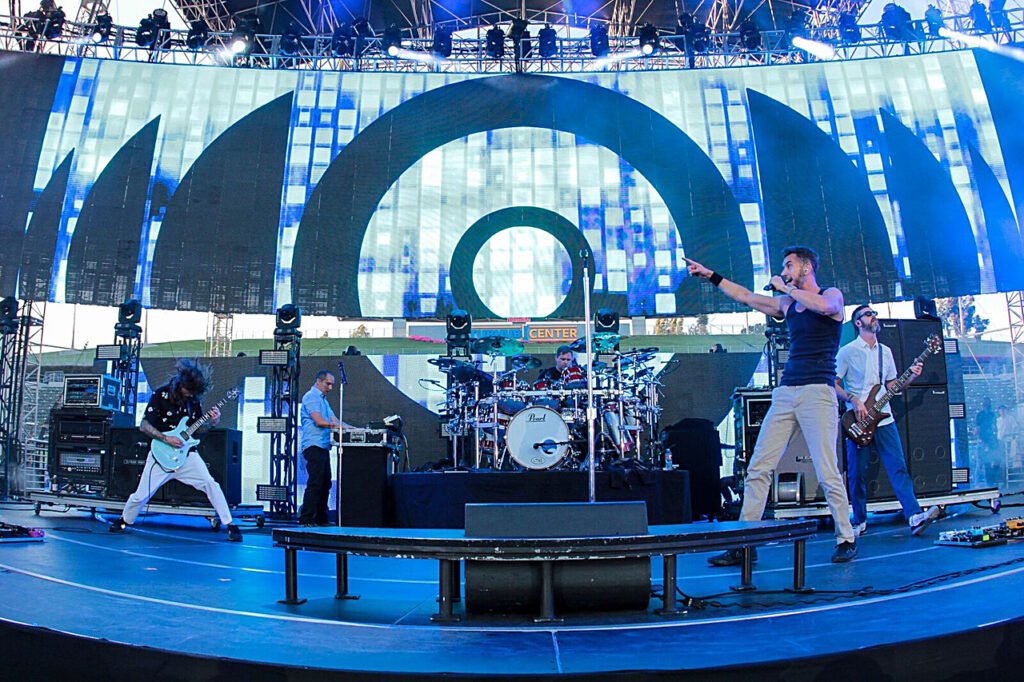
311 Net Worth: The Honest Answer
There is no verified estimate of 311 net worth. No Forbes profile, no Bloomberg index entry, and no audited disclosure puts a number on the band’s combined fortune. 311 is a working band, not a public company, so its members’ pay, royalty splits, touring profits and ownership stakes are private matters between the five of them. Whatever the band is worth — and after nearly four decades of steady touring it is plainly a comfortable sum — sits behind that closed door.
That does not mean the internet is silent. It means the internet is noisy, and almost all of the noise is wrong. A handful of low-authority aggregator pages publish specific figures for the band, but none of them shows any reporting, any source, or any method behind the number. A number with no method is not an estimate. It is a guess dressed up as a fact. This article does not use any of those figures, because no reputable source supports them.
The far commoner error is subtler: it is the wrong number for the right band. Search results for 311 net worth are full of individual figures for the band’s frontman, Nick Hexum, presented as if they were the band’s wealth. Hexum’s reported personal estimate is his own, not the band’s, and it says nothing about what the other four members hold. For the documented facts of the band’s history, see the 311 band Wikipedia page. The wealth discussion in this article is built only from what reputable sources actually publish — and from a clear statement of what they do not.
311 Quick Facts
| Detail | Information |
|---|---|
| Band name | 311 (pronounced “three eleven”) |
| Formed | 1988 |
| Origin | Omaha, Nebraska, United States |
| Members | Nick Hexum, Doug “SA” Martinez, Tim Mahoney, Aaron “P-Nut” Wills, Chad Sexton |
| Former member | Jim Watson (lead guitar, 1988–1990) |
| Genre | Alternative rock, rap rock, reggae rock, funk rock, funk metal |
| Years active | 1988–present |
| Studio albums | Fourteen, from Music (1993) to Full Bloom (2024) |
| Record sales | More than 10 million in the United States, as of 2022 |
| Labels | Capricorn, Volcano, ATO, BMG, and the band’s own imprint |
| Signature events | 311 Day (since 2000) and the 311 Caribbean Cruise (since 2011) |
| Estimated net worth | No reliable published band figure — see below |
The dates, members, albums and sales in this table are documented by Wikipedia, AllMusic and the band’s booking agency. The net-worth line is deliberately blank: no trustworthy band figure exists to put there.
Why No Reliable Band Figure Exists
The first reason 311 net worth cannot be pinned down is structural. A band is not a company with a balance sheet. Its income arrives in many streams — record royalties, streaming, touring, merchandise, licensing, and the band’s own fan events — and each stream is split between five members, managers, agents, a record label, and the costs of keeping a touring band on the road. No public filing ever shows how those splits work, so no outsider can add them up into a single number.
The second reason is that the usual trackers have simply never taken the band up as a group. Forbes has never published a 311 net worth profile. Bloomberg’s billionaires index does not list musicians of this kind. Celebrity Net Worth, which covers almost every public figure with a searchable fortune, has an entry for Nick Hexum alone — and nothing for the band, or for any of the other four members. When every major tracker declines to publish a band number, the responsible conclusion is that no band number can be defended.
The third reason is the band’s own way of working. 311 has been famously independent-minded for decades: it owns its own recording studio, the Hive in North Hollywood, it has self-released albums, and it runs its own fan events rather than handing them to a promoter. That independence keeps more of the money inside the band — and keeps the details of it private. It is one more reason 311 net worth stays out of public view. A band that controls its own business is a band whose finances stay its own.
None of this means the band is poor. Far from it. A group that has sold more than 10 million records, played thousands of shows, and filled arenas on its own holiday for a quarter of a century has plainly earned serious money. The point of this article is narrower and more honest: the money is real, the total is private, and any site that prints a precise band figure is guessing.
What the Individual Members Are Reported to Be Worth
Because there is no published 311 net worth figure for the band, the only numbers in circulation belong to individual members — and even those are estimates of very uneven quality. They are worth reporting with their sources attached, and with a firm warning: adding five personal estimates together does not produce a band net worth. A band’s shared assets, its debts, its touring company and its studio are not captured by summing up what five men are said to be worth on their own.
1. Nick Hexum — About $15 Million, According to Celebrity Net Worth
Nick Hexum, the band’s co-founder, lead vocalist and rhythm guitarist, is the only member with an estimate from a widely cited tracker. Celebrity Net Worth, updated in July 2026, lists his net worth at $15 million. The site describes him as an American singer, songwriter, guitarist, producer and entrepreneur, best known as the co-founder and lead vocalist of 311.
That figure is an estimate built from public sources, not an audited valuation, and Celebrity Net Worth says so itself. It is also Hexum’s alone, and it is not a 311 net worth figure. It reflects his share of the band’s earnings plus his outside work — he has produced, written songs beyond 311, and built side projects over the years — and it cannot be read as the band’s fortune. Still, it is the strongest single number attached to any member of 311, and it sets a useful floor for thinking about the band’s scale.
2. Chad Sexton — $8 to $10 Million, From a Weak Aggregator
Chad Sexton, the band’s drummer since its first days, is given an estimated net worth of $8 million to $10 million by a low-authority aggregator site. The site offers no method, no sources, and no reporting behind the range. It should be treated as a weak, unverified claim — the kind of number that gets copied from site to site until it starts to look established.
That said, the range is at least plausible in shape. Sexton has been a full partner in the band for its entire career, sharing in the same royalties, touring income and fan-event profits as Hexum. A drummer with 38 years in a platinum-selling band would reasonably hold a fortune in the same broad area as the frontman’s. But plausible is not verified, and this article reports the range only as what one weak source claims — not as a fact. It is one more reminder that 311 net worth cannot be built from stray member estimates.
3. Doug “SA” Martinez — About $2 Million, From a Weak Aggregator
Doug “SA” Martinez, the band’s second vocalist and turntablist since 1992, is given an estimated net worth of about $2 million by another low-authority aggregator. The same warning applies: no method, no sources, no verification. The figure is far lower than the estimates for Hexum and Sexton, which is itself a reason to be cautious, since all five members have shared the band’s income for decades.
Martinez’s outside work adds some colour to the picture. Beyond 311, he has acted and worked as a vocalist and turntablist on other projects. Those sidelines may add income, but nothing in the public record quantifies them. The $2 million figure should be read as a weak-source claim, not as a settled fact about his wealth, and it brings a 311 net worth total no closer.
4. Aaron “P-Nut” Wills and Tim Mahoney — No Published Figure
No reputable source, and no aggregator of any standing, publishes a net-worth estimate for bassist Aaron “P-Nut” Wills or lead guitarist Tim Mahoney. That silence is informative in its own way. The internet’s wealth trackers tend to cover frontmen and leave the rest of a band alone — which is exactly the pattern here.
Both men have been full partners in 311 for most of its life: Wills since the band’s formation in 1988, Mahoney since replacing Jim Watson in 1990. They share in the same income streams as Hexum, Sexton and Martinez. The absence of a published figure for either of them is not evidence that they are worth less. It is evidence that nobody has bothered to guess in public.
The honest summary, then, is this. One member has a $15 million estimate from a known tracker. Two members have weak-aggregator ranges that should be handled with care. Two members have no published figure at all. And the band as a whole has no figure from anyone. That is the full state of what 311 net worth can responsibly be said to be — and it is a much more useful answer than a made-up number.
How 311 Makes Money in 2026
A band that has lasted 38 years makes money differently from a band that has lasted three. 311’s income is not a single paycheque. It is a set of streams that have been built up, one at a time, over decades — and the streams reinforce each other in a way that is worth understanding before anyone asks what 311 net worth really means.
1. Touring — The Engine of the Band’s Income
Touring is the heart of 311’s business. The band has toured almost every year since the early 1990s, including its annual summer Unity Tours, and its live show is the product its fans actually pay for. A band with a catalogue as deep as 311’s — fourteen studio albums and a setlist that can stretch past 60 songs — can play multi-night stands in one city without repeating itself, which is exactly what it does at 311 Day.
Concert income is shared between the band, its crew, its management and its booking agency, and the costs of staging a large rock show are substantial. But the volume matters: thousands of shows over 38 years, many of them in amphitheatres and arenas, add up to a very large lifetime gross — the core of any honest 311 net worth discussion. For a band that owns its own studio and runs its own events, the share it keeps is likely larger than for a band that rents everything and outsources everything.
2. Record Sales and Streaming Royalties
311 has sold more than 10 million records in the United States, and its best-known albums carry the certifications to prove it. The self-titled 1995 album — the Blue Album — went triple platinum. Transistor (1997) went platinum. Soundsystem (1999) and From Chaos (2001) went gold, and the Greatest Hits ’93–’03 compilation went platinum as well. Those sales generated royalties that have been paying the band, in one form or another, for thirty years.
Streaming has changed the shape of that income without ending it. A catalogue band earns from every play of “Down”, “All Mixed Up”, “Amber” and “Beautiful Disaster” on every platform, every day, all over the world. The per-stream rate is small, but the catalogue is large and the fanbase is loyal. That slow, steady royalty income is a quiet pillar of 311 net worth. For a band that releases new music — Full Bloom arrived in October 2024 — the old songs keep earning while the new ones add to the pile.
The same pattern holds for other long-running acts: the singer Ames McNamara built a career the same way, with a steady catalogue earning long after the first release.
3. 311 Day and the Caribbean Cruise — Events the Band Owns
The most distinctive part of 311’s income is also the most modern: the band runs its own fan events. 311 Day, held every year since 2021 on March 11, is a multi-night concert built around the band alone, with fans travelling from all 50 states and more than a dozen countries to attend. The Caribbean Cruise, running since 2011, is a floating festival: several days at sea, multiple 311 sets, guest bands, and a private-island stop.
Because the band is the promoter as well as the performer at these events, it captures a far larger share of the money than it would from a standard tour date. Fans pay for cabins, tickets, merchandise and experiences, and the band’s brand — not a festival promoter’s — is what sells them. This is the part of 311 net worth that most coverage misses: the band is not only a recording act, it is an events business with a fiercely loyal customer base.
4. Merchandise, Licensing and the Hive Studio
Merchandise is the quiet earner for every touring band, and 311’s fans are famously committed buyers. T-shirts, posters, vinyl reissues and limited-edition items tied to 311 Day and the cruise sell directly to a fanbase that treats the band as a way of life, not a passing interest. Direct sales, especially at the band’s own events, carry far better margins than wholesale. Merchandise is a small but steady contributor to 311 net worth.
Licensing adds another stream. 311’s songs have appeared in films, television and video games, and its cover of The Cure’s “Love Song” — a number-one Modern Rock hit in 2004 — reached a new audience through the film 50 First Dates. Each placement pays, and the band’s deep catalogue gives licensors plenty to choose from.
Finally, the band owns its own recording studio. The Hive, a North Hollywood studio the band bought in 1995, has hosted every 311 album since 2000. Owning the studio means the band does not pay someone else’s hourly rate to record, and it means the studio itself is an asset — real property and equipment with real value — that belongs to the band’s business rather than to a landlord.
Early Days in Omaha
311 net worth begins, like the band itself, in Omaha, Nebraska — a long way from the Los Angeles music industry the band would later join. All five members grew up in Omaha in the 1970s, and the band they formed there in 1988 was built from friendships, not from a record company’s plan. Nick Hexum sang and played guitar, Aaron “P-Nut” Wills played bass, Chad Sexton played drums, and Jim Watson played lead guitar. Tim Mahoney replaced Watson in 1990, and Doug “SA” Martinez joined in 1992 as a second vocalist and turntablist, completing the lineup that has held ever since.
The band’s name came from an Omaha police code for indecent exposure. A friend of the band had been arrested and cited for skinny dipping in a public pool, and Wills picked the code number — 311 — as the band’s name. It was a joke that stuck, and it gave the band one of the most searchable names in rock: three digits, impossible to confuse with anything else, and easy to turn into a holiday. March 11, written 3/11, would later become the band’s own festival day.
The early years were deliberately independent. The band’s first release, the Downstairs EP, was recorded in 1989 in Hexum’s basement and had no cover art at all. In 1990, the band pressed 300 cassettes of its second independent release, Dammit!, recorded at a studio in Papillion, Nebraska. In 1991, it released Unity on its own label, What Have You Records — 1,000 CDs and 500 cassettes, distributed through consignment and sold at shows. The band headlined local clubs like the Ranch Bowl and the Sokol Auditorium, and considered its first real show to be an opening slot for Fugazi in Omaha on June 10, 1990.
The road, in those days, was genuinely rough. Financing their own tour, the band drove in an old RV borrowed from Sexton’s father and towed a Volkswagen bus carrying their equipment. On the way to an Omaha show, the RV caught fire while tackling a steep incline. The only door was surrounded by flames, so the band jumped through the fire. All of their equipment and possessions were lost, though nobody was seriously hurt. They finished the tour on borrowed equipment. It is the kind of story that sounds like legend — and it is also the first entry in the band’s long list of financial setbacks, survived the same way all the later ones were: by carrying on.
Career Journey
1988–1992: Independent Releases and the Move to Los Angeles
The band’s first four years were a slow build. Three independent releases, a growing local following, and a sound that mixed rock, reggae, rap, funk and punk in a way no other Omaha band was attempting. In 1992, Martinez — whose nickname SA stands for Spooky Apparition — was officially asked to join after years of guest appearances with the band. The same year, the band recorded a six-track demo called Hydroponic and moved to Los Angeles.
Within months of arriving in Los Angeles, 311 was signed to Capricorn Records. The deal turned a regional curiosity into a national act, and it set the pattern for the band’s career: slow, steady growth, built on touring, rather than a single explosive hit. The platinum years that followed are the foundation of 311 net worth, even though no tracker ever put a number on them. The band’s first major-label album would take another year, but the foundation — five members, one sound, and a work ethic forged in a borrowed RV — was already in place.
1993–1994: Music and Grassroots
311’s first major record, Music, was released in 1993, produced by Eddy Offord, who had famously produced Yes and Emerson, Lake & Palmer. The single “Do You Right” received airplay on modern rock stations and reached number 27 on Billboard’s Modern Rock Tracks chart, though the album itself failed to chart at the time. The band toured behind it in the same borrowed-RV spirit, playing wherever it could.
The following year brought the second studio album, Grassroots. It also did only moderate business. Neither album made the band famous, but both built the catalogue and the live following that would matter later. The band’s real asset in this period was not chart position. It was the touring base: fans who had seen the show, bought the shirt, and came back next year with friends.
1995–2001: The Breakthrough and the Platinum Years
Everything changed in 1995. The self-titled album 311 — known to fans as the Blue Album — was recorded live in the studio, in contrast to the band’s previous albums, where instruments had been recorded separately. The first single, “Don’t Stay Home”, was a modest success. The follow-up, “Down”, released 14 months after the album, received heavy airplay on mainstream radio, its video rotated on MTV, and the song hit number one on the Modern Rock chart. “All Mixed Up” followed it to number four. The album reached number 12 on the Billboard 200 and went triple platinum.
The band made its network television debut on Late Night with Conan O’Brien in August 1995 and played “Down” on the Late Show with David Letterman. For a band from Omaha that had pressed its first EP in a basement, this was a transformation — and it was built on a record that had taken more than a year to find its audience. The slow build had paid off.
Transistor, released in August 1997, debuted at number four on the Billboard 200, the band’s highest chart position at the time, and went platinum. A live album, Live, followed in 1998, drawn from a 1997 performance in New Orleans. Soundsystem arrived in 1999, with “Come Original” reaching number six on the Modern Rock chart, and From Chaos followed in late 2001, debuting at number 10. Its first single, “You Wouldn’t Believe”, featured basketball star Shaquille O’Neal in the video. All three albums went gold or better. The band had become a fixture: every album in the top 15, every summer on the road, every year a little bigger.

2002–2011: Evolver, Uplifter and the Unity Tours
The 2000s brought a new rhythm. Since 2000, the band has recorded every album at the Hive, the North Hollywood studio it bought in 1995, and From Chaos was the first album made there. Evolver arrived in 2003, and that summer the band launched its first Unity Tour, with openers including G. Love & Special Sauce, OAR and Something Corporate. The Unity Tour became an annual summer event, and its lineups read like a map of the band’s friendships: The Roots, Papa Roach, Ziggy Marley, The Offspring, Matisyahu, Snoop Dogg and Slightly Stoopid all took turns on the bill.
In 2004, the band’s cover of The Cure’s “Love Song” became a number-one hit on the Modern Rock chart and reached number 59 on the Billboard Hot 100 — the band’s first single ever to reach that chart. The song had featured on the soundtrack of the film 50 First Dates, and a few months later it appeared on the band’s own Greatest Hits ’93–’03, which was certified platinum. The same summer, the band played a free show in a city park in Omaha for the city’s 150th anniversary celebrations, changing the marijuana-related lyrics in its songs for the appearance — a small, telling detail about a band that has always known its audience.
Don’t Tread on Me followed in August 2005, with its title track reaching number two on the Modern Rock chart. In July 2006, the band’s Summer Unity Tour played 37 shows in 27 states. Then the band announced it would take a break from recording.
Uplifter, released in June 2009 and produced by Bob Rock, debuted at number three on the Billboard 200 — the band’s highest chart position in the United States to date. Universal Pulse followed in July 2011, the band’s shortest album at just eight songs, with “Sunset in July” as its first single. By the end of 2011, the band had sold more than 8.5 million records in the United States — and it had completed playing all 50 states on tour.
2012–2024: Independence, Mosaic, Voyager and Full Bloom
The 2010s showed a band increasingly comfortable doing things its own way. Stereolithic, released on March 11, 2014 to coincide with 311 Day, was the band’s first independently released studio album since 1991’s Unity. A four-disc compilation, 311 Archive, followed in 2015 with 81 previously unreleased songs, B-sides and demos — a measure of just how much music the band had stockpiled over the years.
Mosaic, released in June 2017, was the band’s twelfth studio album and its tenth consecutive album to debut in the Top 10 of the Billboard 200, arriving at number six with 39,000 album-equivalent units, of which 37,000 were pure album sales. The band had invited fans to submit their own photos for the album artwork — another small example of the fan-first approach that defines its business. Voyager followed in July 2019, and the band toured that summer with The Offspring on the Never-Ending Summer tour, each band covering one of the other’s songs.
The pandemic cancelled the band’s planned 2020 co-headlining tour with Incubus, and 311 Day 2021 became a livestream from the Hive instead of a live gathering. But the band returned quickly. On October 25, 2024, it released its fourteenth studio album, Full Bloom, preceded by the singles “You’re Gonna Get It” and “Need Somebody”. The band described the album on social media as “311 on steroids”. Thirty-six years after forming in Omaha, it was still making new music — and still touring behind it.
Major Achievements
The band’s record is long, and it is worth setting out plainly, because it is the foundation of 311 net worth.
- More than 10 million records sold in the United States, as of 2022 — a figure that puts 311 among the most durable rock acts of its generation.
- A triple-platinum breakthrough album. The self-titled 311 (1995) reached number 12 on the Billboard 200 and sold three million copies in the United States.
- A number-one single. “Down” topped the Billboard Hot Modern Rock Tracks chart in 1996, and “Love Song” did the same in 2004.
- A top-five album debut. Transistor (1997) debuted at number four on the Billboard 200, and Uplifter (2009) reached number three — the band’s highest chart position.
- Ten consecutive Top 10 albums. Every studio album from the mid-1990s through Mosaic (2017) debuted in the Top 10 of the Billboard 200.
- Fourteen studio albums across 31 years, from Music (1993) to Full Bloom (2024), plus two live albums, four compilations, four EPs and four DVDs.
- A fan holiday of its own. 311 Day has run since 2000, and the Caribbean Cruise since 2011 — events no other band of the era has matched.
- All 50 states played. The band completed touring in every American state by 2010, a touring feat few acts ever manage.
These achievements are documented by Wikipedia, AllMusic and Billboard chart records. They explain why the band has kept earning for so long: a deep catalogue, a loyal audience, and a live show that fans return to year after year.
311 Day and the Caribbean Cruise
No discussion of 311 net worth is complete without 311 Day, because it is the clearest example of the band turning its fans into a business. On March 11, 2000, the band began celebrating an unofficial holiday of its own creation. The date was chosen because March 11 is written in the United States as 3/11. Every other year between 2000 and 2020, and every year since 2021, the band has performed an extended concert for thousands of its fans.
The scale is remarkable. In 2000, the band played 47 songs. In 2004, it played 68 songs in five hours. In 2008, it played 63 songs over three sets to a sold-out crowd of 14,000 fans, who had travelled from all 50 states and 13 countries. In 2020, celebrating 30 years of the band, it played 103 songs over three nights in Las Vegas. In 2022, the two-night event in Las Vegas ran to 89 songs. These are not normal concerts. They are marathons, and fans plan holidays around them.
The Caribbean Cruise works the same way, at sea. The first cruise departed Miami in March 2011 aboard the Carnival Destiny, bound for Grand Turk, with three shows over four days. Later cruises sailed on the Norwegian Pearl to private islands in the Bahamas, and the fifth cruise, in 2017, sailed from Tampa to Cozumel. In 2023, 311 Day itself moved aboard the Norwegian Pearl for the first time, with 73 songs across three nights. A 2027 cruise is already listed, departing Miami in March. For the band, these events are more than concerts: they are a recurring, high-margin business built on a fanbase that treats attendance as a tradition.
How 311’s Longevity Compares With 1990s Peers
Longevity is the real story of 311 net worth, and it stands out even among the band’s own generation. Most of the acts that broke through in the mid-1990s rap-rock boom are gone, broken up, or reduced to nostalgia tours with replacement members. 311 has kept the same five members since 1992, released new music in every decade since the 1980s, and still headlines its own events. That continuity is rare, and it is financially valuable: every year the band stays together, its catalogue, its brand and its fanbase all grow a little more.
The comparison with other long-running touring bands is instructive. Blues Traveler built a similar career on the same model — relentless touring, a devoted fanbase, and a signature live event — and the two bands have shared bills and audiences for decades. What separates 311 is the degree to which it owns its own infrastructure: its studio, its holiday, its cruise, and its direct relationship with its fans. A band that owns the room keeps more of the money than a band that only rents the stage.
The lesson for anyone reading a 311 net worth figure is the same. A band’s wealth is not a single album’s sales, or a single tour’s gross. It is the accumulation of decades of work, minus decades of costs, held in a private business that nobody outside the band can audit. 311’s accumulation is plainly large. Its exact size is not public, and it never has been.
Assets and Lifestyle
There is no comprehensive, publicly verified inventory of the band’s assets, and values should not be assigned to individual properties, vehicles, or private investments without reliable evidence. But a few assets are matters of public record, and they say something useful about how 311 net worth is held.
The most important is the Hive. The band bought its North Hollywood recording studio in 1995, and has recorded every album there since 2000. A Los Angeles recording studio is a substantial asset in its own right — real property, professional equipment, and a working business — and owning it outright removes one of the largest recurring costs a recording band faces. It is also one of the few hard assets behind 311 net worth. It is also the reason the band could keep recording through the streaming era, when many of its peers stopped: the studio was already paid for.
Beyond the studio, the band’s wealth is best understood as a working business rather than a pile of luxury goods. The members are known for a low-key lifestyle relative to their fame — no tabloid mansion portfolio, no supercar collection in the press, no public spending sprees. What the band spends on, publicly, is the work itself: touring production, the 311 Day events, the cruises, and new recordings. That spending is the business reinvesting in itself, which is how a band survives for 38 years.
For readers curious about how their own finances compare, a free net worth calculator can show what assets minus liabilities looks like in practice. The same simple arithmetic — add up what you own, subtract what you owe — is what makes a band’s fortune so hard to pin down from the outside, because only the band knows both sides of the equation.
311’s Financial Setbacks
A 38-year career contains setbacks, and 311’s are worth naming, because they explain why 311 net worth, for all the band’s success, is not the enormous fortune some fans imagine. The first came before the band was famous at all: the RV fire on an early tour destroyed every piece of equipment the band owned. For an unsigned band with no money, that was a near-total loss — survived only because other musicians lent them gear and the tour went on.
The second setback was structural, and it hit the whole industry. The band’s biggest-selling years were the late 1990s, when albums sold for full price. The rise of file-sharing, then streaming, cut the revenue from every record sold. A band that had earned its living from platinum albums had to earn it from touring instead — which is why 311’s touring schedule grew heavier, not lighter, in the 2000s. The band adapted, but the transition cost it years of record income that a 1980s band would have kept.
Label changes added friction. The band moved from Capricorn to Volcano, then to ATO and BMG, and eventually back to releasing records itself. Each move meant new contracts, new terms, and new people taking a share. Self-releasing Stereolithic in 2014 was the band’s answer: keep the label’s share by doing the label’s job. It worked, but it also meant the band carried the costs itself.
The pandemic was the sharpest single blow. The band’s 30th-anniversary tour with Incubus, planned for the summer of 2020, was cancelled entirely. For a band whose income depends on live shows, a year without touring is a year without its main revenue stream. 311 Day 2021 became a livestream from the Hive instead of a sold-out arena — a creative answer, but not a financial replacement for thousands of ticket buyers in a room.
There was also a scare closer to home. In May 2022, P-Nut announced on social media that he would take a hiatus from the band after the upcoming tour schedule. For fans, and for the band’s business, it was a serious moment: the lineup had not changed in 30 years. Six months later, in November 2022, P-Nut announced that he would not be taking the hiatus after all, following discussions with the band and support from his family and fans. The episode ended well, but it showed how much of the band’s value rests on five specific people staying together.
None of these setbacks broke the band. That is the point. A group that survived a fire, a format collapse, label churn, a pandemic and a near-departure — and still released an album in 2024 — has a business built to last. The setbacks explain why the fortune is not larger. The survival explains why it exists at all.
311 Net Worth Growth Timeline
Reliable annual valuations of the band’s complete finances are not publicly available. Rather than invent historical figures, the timeline below follows the band’s documented career and earning opportunities. No invented 311 net worth table appears here, because none could be sourced.
| Period | Financial context |
|---|---|
| 1988–1992 | Formed in Omaha; three independent releases sold at shows; touring in a borrowed RV; signed to Capricorn Records in 1992. |
| 1993–1994 | First two major-label albums, Music and Grassroots, sold modestly; the live following grew faster than the chart positions. |
| 1995–2001 | Breakthrough: the Blue Album went triple platinum; Transistor went platinum; Soundsystem and From Chaos went gold; 311 Day began in 2000. |
| 2002–2011 | Touring became the main income as record sales fell industry-wide; Unity Tours every summer; Uplifter debuted at number three; the first Caribbean Cruise sailed in 2011. |
| 2012–2017 | Self-released Stereolithic; Mosaic became the tenth consecutive Top 10 album; fan-funded artwork and direct sales grew. |
| 2018–2021 | Voyager released; pandemic cancelled the 2020 Incubus tour; 311 Day became a livestream in 2021. |
| 2022–2026 | Returned to live touring; 311 Day moved aboard a cruise in 2023; Full Bloom released in October 2024; a 2027 cruise is listed. |
This timeline separates documented career events from uncertain financial valuations. It shows a band whose earning power peaked in the late 1990s in record sales, then shifted to touring and fan events — and has stayed there ever since.
Interesting Facts About 311’s Wealth
- The band has no published net worth — and that is normal for a band. Wealth trackers cover solo stars, not five-person partnerships. 311 net worth stays private because a band’s money is split five ways through a private business nobody audits.
- Its biggest album took 14 months to break. “Down” was released more than a year after the Blue Album came out. Patience, not a launch-week splash, made the band’s fortune.
- The band owns the studio where it records. The Hive, bought in 1995, has hosted every 311 album since 2000 — an asset that saves the band a fortune in recording costs.
- 311 Day is a business, not just a concert. Fans have travelled from all 50 states and 13 countries for a single event, and the 2020 edition ran to 103 songs over three nights.
- The cruise is the band’s boldest idea. Since 2011, the 311 Caribbean Cruise has put the band, its fans and guest acts on a ship together for days — and the band, as promoter, keeps far more of the money than from a normal tour date.
- Only one member has a tracked net worth. Celebrity Net Worth lists Nick Hexum at $15 million. The other four members have weak-aggregator guesses or nothing at all — which is why no 311 net worth total can be calculated.
- The band’s lineup has not changed since 1992. Thirty-four years with the same five members is almost unheard of in rock, and it is the reason the band’s brand — and its earning power — has never had to be rebuilt.
- A fire nearly ended the band before it began. The borrowed RV burned on an early tour, destroying all the band’s equipment. Borrowed gear and stubbornness kept the tour going.
- The name is a police code. 311 is Omaha’s code for indecent exposure, chosen after a friend was cited for skinny dipping. It also gave the band a ready-made holiday: March 11, or 3/11.
- The band’s newest album came 36 years after it formed. Full Bloom, released in October 2024, is the fourteenth studio album — proof that the earning machine is still running.
FAQs
1. What is 311’s net worth?
There is no reliable published figure for 311 net worth. No major wealth tracker publishes a band estimate, and the five members have never disclosed their combined finances. The only reported number attached to the band belongs to frontman Nick Hexum, estimated at $15 million by Celebrity Net Worth — and that is his personal figure, not the band’s.
2. How much is Nick Hexum worth?
Celebrity Net Worth, updated in July 2026, estimates Nick Hexum’s net worth at $15 million. The figure is an estimate built from public sources, not an audited valuation, and it covers Hexum’s personal wealth — his share of the band’s earnings plus his outside work — rather than the band as a whole.
3. What are the other 311 members worth?
Only weak-aggregator figures exist. One low-authority site puts drummer Chad Sexton’s net worth at $8 million to $10 million, and another puts vocalist Doug “SA” Martinez at about $2 million. Neither figure is verified, and no published estimate exists at all for bassist Aaron “P-Nut” Wills or guitarist Tim Mahoney.
4. How does 311 make money?
The band earns from touring, record sales and streaming royalties, merchandise, licensing, and its own fan events — 311 Day and the Caribbean Cruise. Because the band runs those events itself and owns its own recording studio, it keeps a larger share of the income than a band that outsources everything.
5. How many records has 311 sold?
By 2022, 311 had sold more than 10 million records in the United States. The self-titled 1995 album went triple platinum, Transistor (1997) went platinum, and Soundsystem (1999), From Chaos (2001) and the Greatest Hits ’93–’03 compilation all went gold or platinum. Those sales are the commercial foundation of 311 net worth, even though no tracker has ever valued the band itself.
6. What is 311 Day?
311 Day is the band’s own holiday, celebrated on March 11 (written 3/11) since 2000. Every other year between 2000 and 2020, and every year since 2021, the band has performed an extended concert for thousands of fans. Recent editions have run over two or three nights, with the band playing as many as 103 songs across the event.
7. What is the 311 Caribbean Cruise?
The 311 Caribbean Cruise is a festival at sea that the band has hosted since 2011. It features several days of concerts, guest bands, and a private-island stop. In 2023, 311 Day itself was held aboard the cruise ship for the first time, and a 2027 cruise is already listed.
8. Is 311 still together?
Yes. The band’s lineup — Nick Hexum, Doug “SA” Martinez, Tim Mahoney, Aaron “P-Nut” Wills and Chad Sexton — has been unchanged since 1992. The band released its fourteenth studio album, Full Bloom, in October 2024, and continues to tour and hold its annual 311 Day events.
9. Why is there no official 311 net worth figure?
A band is a private five-person partnership, not a public company. Its income is split between five members, managers, agents and labels, and no public filing shows the splits. Wealth trackers have never published a band figure, and the members have never disclosed their finances — so any precise number found online is a guess without a source.
10. What is 311’s biggest song?
“Down”, from the 1995 self-titled album, is the band’s best-known song. It topped the Billboard Hot Modern Rock Tracks chart in 1996 and drove the album to triple platinum. “All Mixed Up” reached number four on the same chart, and the band’s 2004 cover of The Cure’s “Love Song” also reached number one.
11. Who are the members of 311?
The band’s five members are Nick Hexum (lead vocals, rhythm guitar), Doug “SA” Martinez (vocals, turntables), Tim Mahoney (lead guitar), Aaron “P-Nut” Wills (bass) and Chad Sexton (drums). The lineup has been unchanged since Martinez joined in 1992. The only former member is original lead guitarist Jim Watson, who left in 1990.
12. Where does the name 311 come from?
The name comes from the Omaha Police Department’s code for indecent exposure. A friend of the band was arrested and cited for skinny dipping in a public pool, and bassist Aaron “P-Nut” Wills chose the code number as the band’s name. The band pronounces it “three eleven”.
Final Takeaway
311 net worth has no reliable published figure, and after a full look at the band’s career, that is the only honest answer. The band has sold more than 10 million records, released fourteen studio albums, toured for 38 years, and built fan events — 311 Day and the Caribbean Cruise — that no other band of its generation has matched. Its frontman is reported to be worth about $15 million, its drummer is given a weak-aggregator range of $8 million to $10 million, and the other three members have little or nothing published about their personal wealth at all.
The most accurate way to understand 311 net worth is to stop looking for a single number and start looking at the machine that makes it. A band that owns its studio, runs its own events, keeps the same five members for 34 years, and still releases new music in its fourth decade is a band with a durable, working fortune — even if the total stays private. The fortune is real. The figure is not public. And any site that prints one is guessing.
To explore more articles and updates about net worth and financial guides, feel free to check our Home Page.

Pingback: Alessandro Benetton Net Worth: The Figure-Free Fortune of Italy's Lateral Heir After 33 Years
Pingback: Rush Net Worth 2026: Geddy Lee, Alex Lifeson and Neil Peart — the Members' Fortunes Explained