
Rush Net Worth 2026: Geddy Lee, Alex Lifeson and Neil Peart — the Members’ Fortunes Explained
Rush net worth has no single verified dollar figure, and any article that prints one as a fact is guessing. Rush was a band, not a person, and a band does not file a tax return or publish a balance sheet. The honest answer is the three fortunes behind the name: Geddy Lee is reported at about $50 million, Alex Lifeson at $35–40 million, and Neil Peart at $42–45 million at the time of his death in 2020. Those are estimates from net-worth trackers, not audited accounts.
That three-way split is what makes this question different from most net-worth searches. A solo singer has one fortune to estimate. Rush had three men who shared a catalogue, a touring business and a brand for more than forty years, then divided the rewards three ways — minus managers, labels, taxes and five decades of living costs. Added together, the three figures give roughly $127–135 million, inside the combined-band estimates of $90–130 million and $120–180 million that circulate online. Yet even that sum is an estimate built on estimates, and this article will not dress it up as a confirmed total.
What is documented, and what this article sticks to, is the career that produced those fortunes. Rush formed in Toronto in 1968, sold more than 40 million albums worldwide, recorded 19 studio albums, won a place in the Rock and Roll Hall of Fame in 2013, and — after a farewell tour in 2015 and Peart’s death in 2020 — returned to the stage in 2026 with Lee and Lifeson leading a new lineup. The rest of this article explains how the money was made, who holds what, and why the numbers disagree.
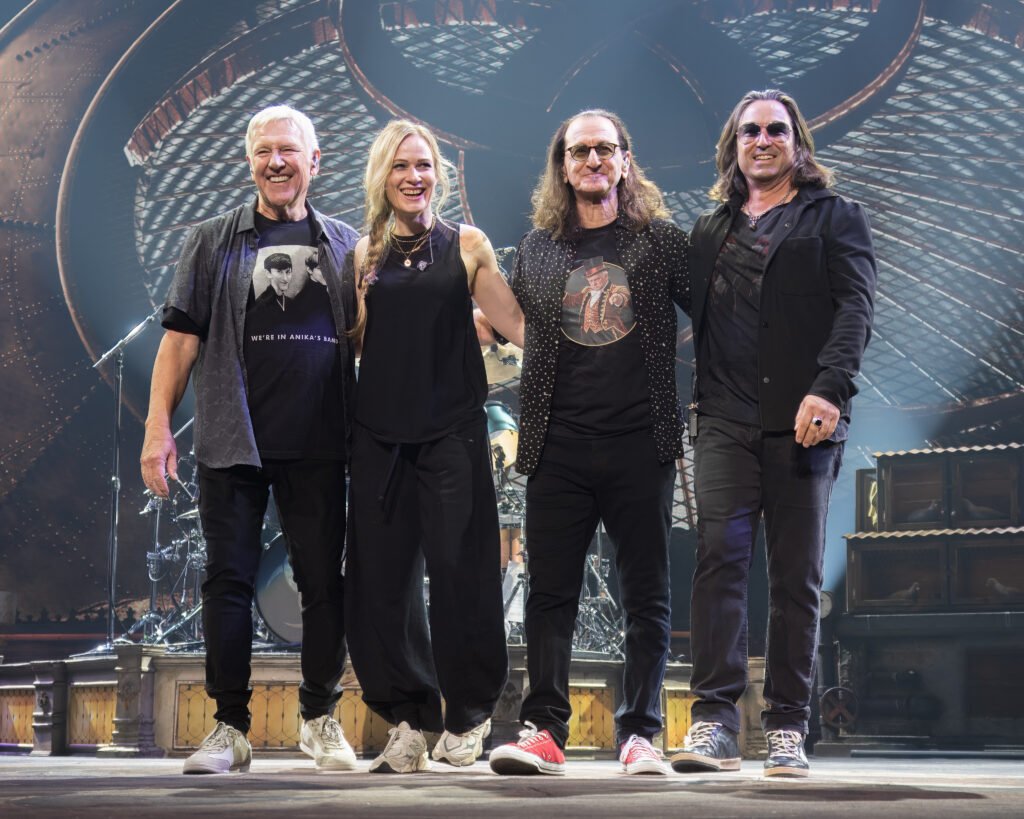
Table of Contents
Rush Net Worth: Why There Is No Single Band Figure
The first thing to understand about rush net worth is that the question itself is slightly the wrong shape. People search for it as if Rush were one person with one bank account, but the band was a partnership of three working musicians who were paid through a company structure, split royalties three ways, and each kept their own savings, investments and property. No financial publication has ever audited the band as a single entity, and no member has ever disclosed a combined figure.
That is why the published numbers for the band as a whole disagree so much. Some pages add the three members’ reported fortunes and present the total as the band’s worth. Others quote a combined range of $90–130 million, while a different page gives $120–180 million. Both ranges are plausible arithmetic, but neither comes from a named source, a document or an interview. They are, at best, informed guesses built on the same three individual estimates this article uses.
There is also a figure this article will not repeat as a claim: a $600 million band total that appears on one site without any source behind it. Repetition is not verification, and the $600 million figure has no reporting behind it, so it is left out of the honest answer.
The responsible way to read rush net worth, then, is as a members’ breakdown, like a cast ranking. Geddy Lee, the frontman, bassist and keyboard player, is the richest of the three at a reported $50 million. Neil Peart, the drummer and lyricist, was reported at $42–45 million when he died. Alex Lifeson, the guitarist and co-founder, is reported at $35–40 million. If you want a single number to carry away, the combined range of roughly $127–135 million — the sum of the three reported figures — is the closest thing to an answer, but remember what it is: three estimates added together, not a verified band fortune. Anyone comparing bands can get a sense of how such long-career totals build up by trying a net worth calculator and seeing how decades of steady income compound into a large sum.
Rush Quick Facts
| Detail | Information |
|---|---|
| Band | Rush |
| Formed | August 1968, Willowdale, Toronto, Ontario, Canada |
| Classic lineup | Geddy Lee (bass, vocals, keyboards), Alex Lifeson (guitar), Neil Peart (drums, lyrics) |
| Original members | Alex Lifeson, John Rutsey (drums), Jeff Jones (bass, vocals); Lee replaced Jones shortly after formation |
| Genre | Rock, progressive rock, hard rock |
| Studio albums | 19, from Rush (1974) to Clockwork Angels (2012) |
| Albums sold | More than 40 million worldwide (industry estimates put the total above 43 million); 25–27 million in the United States |
| Gold / platinum albums | 24 gold, 14 platinum (3 multi-platinum) records in the United States |
| Best-known songs | “Tom Sawyer”, “Limelight”, “The Spirit of Radio”, “Closer to the Heart”, “Subdivisions”, “YYZ” |
| Hall of Fame | Canadian Music Hall of Fame 1994; Rock and Roll Hall of Fame 2013 |
| Honours | Officers of the Order of Canada (as a group, 1996); seven Grammy nominations; multiple Juno Awards |
| Final tour (original lineup) | R40 Tour, ending 1 August 2015 at the Forum, Los Angeles |
| Reunion tour | Fifty Something tour, announced 6 October 2025, began 7 June 2026, with Anika Nilles on drums and Loren Gold on keyboards |
| Estimated net worth (band total) | No single verified figure; members’ reported fortunes sum to roughly $127–135 million |
The band facts in this table are documented by Wikipedia, the Canadian Music Hall of Fame and contemporary reporting. The net-worth line is an estimate built from the members’ reported figures, not an official financial record.
The Three Members’ Reported Fortunes
| Member | Role | Reported net worth | Source of the estimate |
|---|---|---|---|
| Geddy Lee | Lead vocals, bass, keyboards | About $50 million | Celebrity Net Worth; repeated by ComingSoon and other trackers in 2025 |
| Alex Lifeson | Guitar, backing vocals | $35–40 million | $35 million on several tracker pages; $40 million on MetalCastle |
| Neil Peart | Drums, percussion, lyrics | $42–45 million at death (7 January 2020) | $42 million on several tracker pages; $45 million on MetalCastle |
No member’s figure has ever been confirmed by the musician himself, his family or an audited disclosure. Treat each number as a published estimate, and the ranking — Lee first, Peart second, Lifeson third — as the consistent pattern across the trackers rather than a proven fact.
The Three Fortunes Behind Rush Net Worth
The fairest way to answer the question is member by member, because the three men earned the same money in very different ways once the band stopped touring. Lee kept working in public, with books and a memoir tour. Lifeson kept playing quietly, with new instrumental music and a new band. Peart, who died in 2020, left books and a catalogue that keeps earning.
1. Geddy Lee — About $50 Million
Geddy Lee is the richest member of Rush, with Celebrity Net Worth putting his fortune at $50 million, a figure repeated by several other trackers through 2025. He was born Gary Lee Weinrib in Toronto on 29 July 1953, the son of Holocaust survivors, and he joined Rush in September 1968 at the invitation of his school friend Alex Lifeson, replacing the original bassist Jeff Jones. He was fifteen years old.
Lee’s share of the rush net worth story is the largest because he did the most outside the band. He was frontman, bassist and keyboard player in one person, and he sang every lyric Peart wrote. His solo album My Favorite Headache came out in 2000, and in the years after Rush stopped touring he became an author: Geddy Lee’s Big Beautiful Book of Bass in 2018, a celebration of his vast vintage bass guitar collection, and his memoir My Effin’ Life, published on 14 November 2023, which became a bestseller and took him on a spoken-word tour of theatres in Britain and North America.
Lee is also a serious collector, and collecting is the one part of his wealth that is visible in public. His vintage bass collection has been exhibited and written about at length, and his baseball memorabilia collection was the subject of a whole book of its own. Collections like these are hard to value from the outside, and no tracker explains how much of the $50 million figure they account for, which is one more reason to treat the number as an estimate.
2. Alex Lifeson — $35–40 Million
Alex Lifeson, the guitarist who co-founded Rush in 1968, is reported at $35 million on several tracker pages and $40 million on MetalCastle, giving the $35–40 million range used in this article. He was born Aleksandar Živojinović in Fernie, British Columbia, on 27 August 1953, and he is the only member who was there from the very first rehearsal to the final show of the R40 tour in 2015 — and now to the 2026 reunion.
Lifeson’s contribution to rush net worth is easy to undervalue because guitarists in a three-piece band do quiet work. He wrote the riffs that carry “Tom Sawyer”, “Limelight” and “The Spirit of Radio”, and his playing — acoustic passages, vast chord voicings, solos that serve the song rather than the ego — is the sound most fans picture when they think of Rush.
After Peart’s death, Lifeson was the member who kept making new music most steadily. In mid-2021 he released instrumental tracks, including “Kabul Blues” and “Spy House”, on his own website, and he formed a new band, Envy of None, with Andy Curran, Maiah Wynne and Alfio Annibalini. Their debut album appeared on 8 April 2022, followed by an EP in 2023 and a second album, Stygian Wavz, in March 2025. None of these projects will have earned Rush-scale money, but they show a working musician still earning from his craft in his seventies, and they help explain why his reported fortune sits a little below Lee’s rather than far behind it.
3. Neil Peart — $42–45 Million at Death
Neil Peart, the drummer and lyricist, was reported at $42 million on several tracker pages and $45 million on MetalCastle at the time of his death on 7 January 2020, aged 67, after a three-and-a-half-year battle with glioblastoma, a form of brain cancer. He was born Neil Ellwood Peart in Hamilton, Ontario, on 12 September 1952, and he joined Rush in July 1974, replacing the original drummer John Rutsey just two weeks before the band’s first tour of the United States.
Peart’s share of rush net worth came from two sources no other member had. First, he was the band’s lyricist, writing almost every word Lee sang from 1975 onwards, which gave him a songwriter’s share of the publishing income on top of his performer’s share. Second, he was a published author in his own right, writing seven non-fiction books, from The Masked Rider in 1996 — about a month-long bicycle trip through Cameroon — to Ghost Rider: Travels on the Healing Road in 2002, the account of the 55,000-mile motorcycle journey he took after losing his daughter and his wife within ten months of each other.
Peart’s fortune stopped growing in the ordinary sense when he died, but it did not stop earning. His share of the Rush catalogue — record sales, streaming, licensing, reissues — continues to generate royalties, and those now flow to his estate, his widow Carrie Nuttall and his daughter Olivia. The $42–45 million figure is therefore a snapshot from January 2020, not a live total, and the estate’s value today is not publicly reported.
Where the Money Came From
Rush’s income was never a single windfall. It was four streams running side by side for decades: records, concerts, publishing and books, and the solo work each member did on the side. Understanding those streams explains both the size of the fortunes behind rush net worth and why they are so hard to pin down — every stream was split three ways, then split again with managers, labels and the taxman.
1. Album Sales and a Catalogue That Keeps Selling
Record sales were the foundation of the band’s wealth. Rush released 19 studio albums between 1974 and 2012, and industry sources estimate total worldwide sales at more than 40 million copies, with some estimates above 43 million. In the United States alone the band sold 25–27 million albums, won 24 gold and 14 platinum records, and sits near the top of the all-time ranking for consecutive gold or platinum studio albums by a rock band, behind only the Beatles and the Rolling Stones.
The biggest sellers were the albums every rock fan knows. 2112 (1976) was the breakthrough, a side-long science-fiction suite that saved the band from being dropped by its label. Moving Pictures (1981), with “Tom Sawyer”, “Limelight” and the instrumental “YYZ”, was the commercial peak, selling more than four million copies in the United States. Permanent Waves (1980), A Farewell to Kings (1977) and Hemispheres (1978) all went gold or platinum, and even the later albums — Test for Echo (1996), Vapor Trails (2002) and the final record, Clockwork Angels (2012) — sold to a loyal audience that never really shrank.
What those sales meant in cash for each member is the part nobody can verify, since the label and the manager take their cuts before the three musicians divide what remains. A catalogue that still sells and streams, however, pays every year without any new work, and that slow income is the largest single reason the three reported fortunes are as big as they are.
2. Touring — the Loudest Income Stream
Touring was where Rush earned the most money, and where the band’s reputation was made. For forty years the trio played long, demanding tours built on three-hour shows, famously elaborate drum kits and a fanbase that returned year after year. The R40 tour of 2015, the band’s 40th-anniversary run, ended on 1 August 2015 at the Forum in Los Angeles, and it was the last time the original trio played together.
Concert income is split with promoters and venues, and the costs of staging a Rush show — the crew, the transport, the production — were famously high. But a band that can fill arenas for four decades has a touring business most acts never achieve, and the same logic applies to other long-running groups: the economics of a band that tours for decades are closer to a small company than to a gig. A comparable case is 311 net worth, another band whose fortune was built the same way, one tour at a time over a very long career.
The reunion has now added a new touring chapter. The Fifty Something tour, which began on 7 June 2026 at the Kia Forum in Los Angeles — the same venue as the final R40 show — sold out its first dates immediately, expanded to 58 shows across 24 cities, and had sold more than half a million tickets for 2026 alone. That is fresh income for Lee and Lifeson in their seventies, and it is the first time in eleven years that the Rush name has earned touring money.
3. Lyrics, Publishing and Books
Publishing income is the quiet stream in the rush net worth story, and it matters more than it looks. Every time a Rush song is played on the radio, streamed, used in a film or covered by another artist, a publishing royalty is paid to the songwriters. Lee and Lifeson co-wrote the music; Peart wrote the words.
The books were a second, smaller publishing stream. Peart’s seven non-fiction books sold steadily to a readership that overlapped heavily with Rush fans, and Ghost Rider in particular became a well-known travel memoir in its own right. Lee’s bass book and memoir were both bestsellers in their categories, and the memoir’s theatre tour added ticket income on top of book sales. None of these books made anyone rich on its own, but together they turned two of the three members into working authors with a second career.
4. Solo Work, Sessions and Collecting
The fourth stream is everything the three men did outside Rush. Lee’s solo album My Favorite Headache (2000) and his later book projects, Lifeson’s Envy of None albums and instrumental tracks, and Peart’s books and his work with the Buddy Rich Big Band all earned money in their own right. None of them matched Rush’s earnings, but they diversified each man’s income, so that a year without a Rush album still had a pay cheque in it.
Collecting deserves a mention too, although it is the hardest stream to value. Lee’s vintage bass guitars and baseball memorabilia are a genuine collection built over decades, and pieces from it have appeared at auction through Christie’s. A collection like that is both a passion and an asset: it can be worth a great deal, but its value is only realised when pieces are sold, and no tracker publishes an inventory or a valuation. It is one of the reasons the $50 million figure for Lee should be read as an estimate with a wide margin of error.
Early Life and the Toronto Beginning
Rush began in a suburb, not in a boardroom. The band formed in August 1968 in Willowdale, a neighbourhood in the north of Toronto, when the guitarist Alex Lifeson, the drummer John Rutsey and the bassist and singer Jeff Jones started playing together. Jones left shortly afterwards and recommended his school friend Geddy Lee as a replacement, and Lee joined in September 1968, at the age of fifteen.
The early years were hard in the ordinary way that young bands find hard. There was no money to speak of, no record deal, and no audience beyond southern Ontario. The band’s first album, Rush, released in 1974, was a blues-flavoured hard-rock record that sold modestly. Then Rutsey left, for reasons of health and musical direction, and everything changed. Neil Peart, a drummer from Hamilton, Ontario, who had been working in England and playing in local bands, joined in July 1974, two weeks before Rush’s first tour of the United States. He brought two things the band had lacked: a drummer of extraordinary technical ability, and a lyricist with a love of literature, science fiction and philosophy. For the full biographical record of the band’s formation and career, see the Rush (band) Wikipedia page.
Lee’s own beginning was the least privileged of the three. Born Gary Lee Weinrib to parents who had survived the Holocaust, he grew up in Toronto, met Lifeson at school, and took his stage name from his grandmother’s pronunciation of “Gary”. Lifeson, born in Fernie, British Columbia, was the son of Serbian immigrants. Peart grew up in Port Dalhousie, Ontario, and worked in his father’s farm-equipment business before music took over. None of the three came from money, and the fortune behind rush net worth was built from nothing but rehearsal rooms, vans and record sales.
Career Journey: From Bar Band to the Hall of Fame
The career behind rush net worth falls into four clear acts, and each one changed the band’s earning power. The first act was the climb, from 1974 to 1980. The second was the peak, from 1981 to the early 1990s. The third was survival and reinvention, from the late 1990s to 2012. The fourth was farewell, silence and an unexpected return.
1974–1980: The Climb, and the 2112 Gamble
Rush’s first three albums — Rush (1974), Fly by Night (1975) and Caress of Steel (1975) — sold modestly, and Caress of Steel sold so poorly that the band’s label considered dropping them. Instead of retreating to safer, shorter songs, Rush doubled down. The next album, 2112 (1976), opened with a twenty-minute science-fiction suite about a future society that bans music, and it became the band’s breakthrough, going gold and then platinum. It was the gamble on which rush net worth was built: without 2112, there would have been no fortune to write about.
The albums that followed — A Farewell to Kings (1977), with “Xanadu” and “Closer to the Heart”, and Hemispheres (1978) — built the band’s reputation as the thinking person’s rock group, and Permanent Waves (1980), with “The Spirit of Radio” and “Freewill”, gave Rush its first real radio hits. By 1980 the band was a headliner, and the bar-band years were over.
1981–1996: The Peak Years
Moving Pictures, released in 1981, was the commercial peak of Rush’s career. “Tom Sawyer” became the band’s signature song, “Limelight” addressed the strangeness of fame itself, and “YYZ” — named after the airport code for Toronto Pearson International Airport — became a showcase for Peart’s drumming and a staple of rock radio. The album sold more than four million copies in the United States and has never left the catalogue.
The 1980s brought synthesisers, shorter songs and a more polished sound, with albums like Signals (1982), Grace Under Pressure (1984) and Power Windows (1985). By the early 1990s, with albums like Roll the Bones (1991) and Counterparts (1993), Rush were elder statesmen of rock, respected by younger bands from Metallica to the Smashing Pumpkins, who named them as a formative influence.
1997–2012: Tragedy, Silence and Return
The third act began with the worst event in the band’s history. On 10 August 1997, soon after the Test for Echo tour, Peart’s nineteen-year-old daughter Selena was killed in a single-car crash on Highway 401 near Brighton, Ontario. His common-law wife of twenty-three years, Jacqueline Taylor, died of cancer on 20 June 1998, ten months later. Peart told his bandmates at her funeral to consider him retired, and he set off on a motorcycle journey across North and Central America that covered 55,000 miles and became the book Ghost Rider.
Rush stopped for four years. There was no album, no tour and no public statement about the future. When Peart returned, the band recorded Vapor Trails (2002), an album shaped by grief and recovery, and went back on the road. The years that followed brought live albums, tours and a final run of studio records, ending with Clockwork Angels (2012), a full concept album. In 2013, after years of fan campaigning, Rush were inducted into the Rock and Roll Hall of Fame, an honour many felt was long overdue.
2015–2026: Farewell, Loss and an Unexpected Return
The R40 tour of 2015 was announced as a 40th-anniversary celebration, but it became a farewell. Peart, who had long said touring was physically punishing, retired from the road after the final show on 1 August 2015 at the Forum in Los Angeles. Lifeson confirmed in January 2018 that the band had decided not to resume, citing Peart’s health as a factor. Then, on 7 January 2020, Peart died of glioblastoma at the age of 67, and the news was announced three days later. Lee and Lifeson said at the time that Rush was over.
For five years, that was the end of the story. Lee wrote his memoir and toured theatres talking about it. Lifeson made new music with Envy of None. Then, in the autumn of 2025, the two surviving members changed their minds. The return is covered in the next section, and it is the newest chapter in the rush net worth story — the first new Rush income in more than a decade.
The 2026 Reunion and Rush Net Worth Today
On 6 October 2025, Lee and Lifeson announced that Rush would tour again in 2026, under the name the Fifty Something tour, celebrating more than fifty years of the band’s music and the life of Neil Peart. Lee said at the time that he and Lifeson had done “some serious soul searching” and had decided they missed playing the music, and that it was time for “a celebration of 50-something years of Rush music”. The announcement came as a home video in a Rush newsletter, and it was the biggest surprise in the band’s recent history.
The new lineup is a quartet. German drummer Anika Nilles, who had toured with the guitarist Jeff Beck in 2022, fills Peart’s place behind the kit, and the keyboardist Loren Gold joins Lee on keyboards. The tour began on 7 June 2026 at the Kia Forum in Los Angeles — the same venue where the R40 tour had ended eleven years earlier — and the first dates sold out immediately. The run expanded to 58 shows across 24 cities, with more than half a million tickets sold for 2026.
What does the reunion mean for rush net worth? For Lee and Lifeson, it means a new stream of touring income in their seventies, eleven years after their last tour together. And for the band’s legacy, it means the Rush name is a live, working concern again rather than a closed catalogue. Nobody has published an estimate of what the tour is worth to the two surviving members, and this article will not invent one — but a sold-out arena tour is, by any measure, the most lucrative thing either man has done since 2015.

Assets and Lifestyle
There is far less publicly documented about the assets behind rush net worth than there is about the band’s music, and the gap is itself revealing. None of the three was a celebrity property buyer or a collector of cars in the public eye. What is documented is quieter: Lee’s bass guitars and baseball memorabilia, Peart’s books and his motorcycles, and Lifeson’s guitars. Rush were famously modest for a band of their success — no private jets in the headlines, no tabloid spending, no business empire.
Peart lived in Santa Monica, California, in his later years with his wife Carrie and their daughter Olivia, and his great material passion was motorcycles, which he rode across continents and wrote about at length. Lifeson has kept the lowest public profile of the three, living in Canada and working on music and painting away from the spotlight. The same low-key pattern shows in other long-career musicians whose wealth sits in catalogues rather than in mansions — Ben Barnes net worth is a different kind of career, but it shows the same gap between a public profile and a private balance sheet.
The most valuable asset any of the three owns is not a house or a car. It is the catalogue: nineteen studio albums, plus live records and compilations, that continue to earn through streaming, licensing, reissues and the new boxed retrospective Rush 50. A catalogue like that pays its owners every year, and it is the single biggest asset behind rush net worth.
Rush’s Financial Setbacks
Most net-worth articles have a dramatic setbacks section — a fraud case, a bankruptcy, a divorce. Rush’s story has no such scandal. There is no public record of any member losing money to fraud, no lawsuit over royalties that reached the headlines, no bankruptcy and no failed business venture. The absence of a financial disaster is not a gap in the research; it is the research result.
That does not mean the road was free of financial risk. The first real risk was the 2112 gamble itself: after the poor sales of Caress of Steel, the band bet its career on a twenty-minute science-fiction suite that its label did not want. If 2112 had failed, Rush would very likely have been dropped, and there would be no fortune to write about. It succeeded, but it was a genuine all-or-nothing bet.
The second risk was structural, and it applies to every band. Rush’s earnings were split three ways for forty years, and each member also paid a manager, a label and the tax authorities. The setbacks in the rush net worth story are therefore about lost time, not lost money.
The third setback was not financial at all, but it stopped the money for four years. After Peart’s daughter and wife died in 1997 and 1998, the band simply stopped. There were no albums, no tours and no income from Rush for the best part of four years, and there was no guarantee the band would ever return. That the three men came back, recorded Vapor Trails and toured again is a testament to their friendship as much as to their business sense. The final setback was Peart’s illness and death, which ended the original band for good and closed the touring income that had sustained all three men for decades — until the 2026 reunion reopened it for the two survivors.
Rush Net Worth Growth Timeline
No audited year-by-year record of rush net worth exists, and this article will not invent one. What follows instead is a qualitative timeline: the documented events that built the three fortunes, in order, without invented numbers.
| Period | Financial context |
|---|---|
| 1968–1974 | Band forms in Toronto; years of bar and school gigs. No income of note; first album Rush (1974) sells modestly. |
| 1974–1976 | Peart joins (July 1974). Fly by Night and Caress of Steel sell poorly; 2112 (1976) breaks through and goes gold, then platinum. First real earnings. |
| 1977–1981 | A Farewell to Kings, Hemispheres, Permanent Waves; Moving Pictures (1981) becomes the commercial peak, with more than four million US sales. Arena headliners. |
| 1982–1996 | Synthesiser-era albums, large tours, steady catalogue sales; 24 gold and 14 platinum records accumulate in the US. |
| 1997–2001 | Peart’s daughter dies (August 1997) and his wife dies (June 1998); band stops for four years. No Rush income; Peart writes Ghost Rider. |
| 2002–2012 | Return with Vapor Trails (2002); touring resumes; final studio album Clockwork Angels (2012). |
| 2013–2015 | Rock and Roll Hall of Fame induction (2013); R40 farewell tour ends 1 August 2015 at the Forum, Los Angeles. |
| 2016–2020 | No touring; Lee and Lifeson work on solo projects; Peart dies 7 January 2020, aged 67. Catalogue income continues. |
| 2021–2025 | Lee publishes My Effin’ Life (November 2023) and tours theatres; Lifeson releases Envy of None albums (2022, 2025). Reunion announced 6 October 2025. |
| 2026 | Fifty Something reunion tour begins 7 June 2026 at the Kia Forum; 58 shows, more than half a million tickets sold for 2026; Sphere residency announced for May 2027. |
This timeline separates documented career events from uncertain financial valuations. The wealth behind rush net worth was built in the middle rows — the breakthrough of 2112, the peak of Moving Pictures, and four decades of touring.
Interesting Facts About Rush’s Wealth
The most interesting fact about rush net worth is how long it took to build. Rush were not an overnight success. They played bars for six years before their first album, nearly lost their record deal after their third, and only became arena headliners in their thirteenth year as a band. The fortunes in this article are the product of patience, not of a single hit.
A second fact is that Rush never had a number-one single in the United States. “Tom Sawyer”, “Limelight” and “The Spirit of Radio” are among the most-played rock songs in history, yet the band’s wealth came from albums and concerts, not from chart-topping singles.
A third fact is the size of the drum kit. Peart’s touring drum set was famously enormous — dozens of drums, cymbals and percussion instruments arranged in a semi-circle — and it became a symbol of the band’s ambition. It was also a symbol of its costs: moving a show of that scale around North America for forty years was expensive, and the touring income had to cover it before anyone was paid.
A fourth fact is the band’s relationship with its fans. Rush fans are famously loyal, and that loyalty is a financial asset in itself: a band that can sell out arenas eleven years after its farewell tour, as the Fifty Something tour did in 2026, has an audience that does not age out.
A fifth fact is the books. Between them, the three members published more books than most rock bands manage albums: Peart’s seven non-fiction books and two novels, Lee’s bass book and bestselling memoir. For a band whose members are often described as the most bookish in rock, the library is part of the fortune.
FAQs
What is Rush’s net worth in 2026?
There is no single verified figure for rush net worth. The honest answer is the three members’ reported fortunes: Geddy Lee at about $50 million, Alex Lifeson at $35–40 million, and Neil Peart at $42–45 million at the time of his death in 2020. Added together, those figures give roughly $127–135 million, which sits inside the published combined-band estimates of $90–130 million and $120–180 million.
Who is the richest member of Rush?
Geddy Lee is the richest member of Rush, with a reported net worth of about $50 million, according to Celebrity Net Worth and other trackers. Neil Peart was second at a reported $42–45 million, and Alex Lifeson third at a reported $35–40 million. The ranking is consistent across the trackers, although every figure is an estimate.
How did Rush make their money?
Rush made their money from four sources over more than forty years: album sales of more than 40 million records worldwide, decades of arena touring, songwriting and publishing royalties, and the books and solo projects of the individual members.
Why do different sites give different figures for Rush’s net worth?
Because no official figure exists for the band as a whole, every published number is an estimate built from assumptions about record royalties, touring income, taxes and spending. Different trackers make different assumptions. The $600 million band figure that appears on one site has no source behind it and should not be used.
What was Neil Peart’s net worth when he died?
Neil Peart was reported to be worth $42–45 million when he died on 7 January 2020, aged 67, after a three-and-a-half-year battle with glioblastoma, a form of brain cancer. His share of the Rush catalogue continues to earn royalties for his estate, his widow Carrie Nuttall and his daughter Olivia.
How much is Geddy Lee worth?
Geddy Lee is reported to be worth about $50 million, according to Celebrity Net Worth, a figure repeated by other trackers through 2025. Some trackers put him lower, at around $40 million. His wealth comes from Rush’s records and tours, his solo album and books, and his collections of vintage bass guitars and baseball memorabilia.
How much is Alex Lifeson worth?
Alex Lifeson is reported to be worth $35–40 million — $35 million on several tracker pages and $40 million on MetalCastle. His wealth comes from his share of Rush’s records, touring and songwriting royalties, and from his later work with Envy of None.
Is Rush touring again in 2026?
Yes. Lee and Lifeson announced the Fifty Something reunion tour on 6 October 2025, and it began on 7 June 2026 at the Kia Forum in Los Angeles. The 2026 run expanded to 58 shows across 24 cities, with more than half a million tickets sold, and a Las Vegas Sphere residency was announced for May 2027.
How many albums did Rush sell?
Rush sold more than 40 million albums worldwide, with industry estimates putting the total above 43 million, including 25–27 million in the United States. The band won 24 gold and 14 platinum records in the US, and Moving Pictures (1981) was their best-selling album, with more than four million copies sold in America. That catalogue is still the engine of rush net worth.
When were Rush inducted into the Rock and Roll Hall of Fame?
Rush were inducted into the Rock and Roll Hall of Fame in 2013, after years of campaigning by their fans. They had already been inducted into the Canadian Music Hall of Fame in 1994, and in 1996 the three members were made Officers of the Order of Canada as a group.
Final Takeaway
Rush net worth is best understood not as one number but as three careers that ran together for forty years. Geddy Lee’s reported $50 million, Neil Peart’s $42–45 million and Alex Lifeson’s $35–40 million add up to roughly $127–135 million — a fortune built without a number-one single, without a scandal, and without ever leaving the band that three Toronto teenagers started in 1968. It was built the slow way: nineteen albums, four decades of touring and a catalogue that never stopped selling.
The more interesting story is what the reunion says about that fortune. At seventy-three, Lee and Lifeson did not need to tour again. They chose to, because the music still mattered to them and to the audiences who had waited a decade to hear it live. Peart is remembered at every show, and his share of the catalogue keeps earning for his family. The wealth behind rush net worth was never really about the money — it was about three musicians who kept a partnership alive for half a century, and who are still, in 2026, playing the songs they wrote together.
Whatever the true total, the foundation behind rush net worth is already in place: more than 40 million albums sold, a place in the Rock and Roll Hall of Fame, a catalogue that pays every year, and a reunion tour that proved the audience never left. The band that nearly lost its record deal in 1976 outlasted almost every act of its generation — and then came back for more.
To explore more articles and updates about net worth and financial guides, feel free to check our Home Page.
