
Alan Gerry Net Worth 2026: The Cablevision Pioneer’s Honest ~$1.5 Billion Fortune
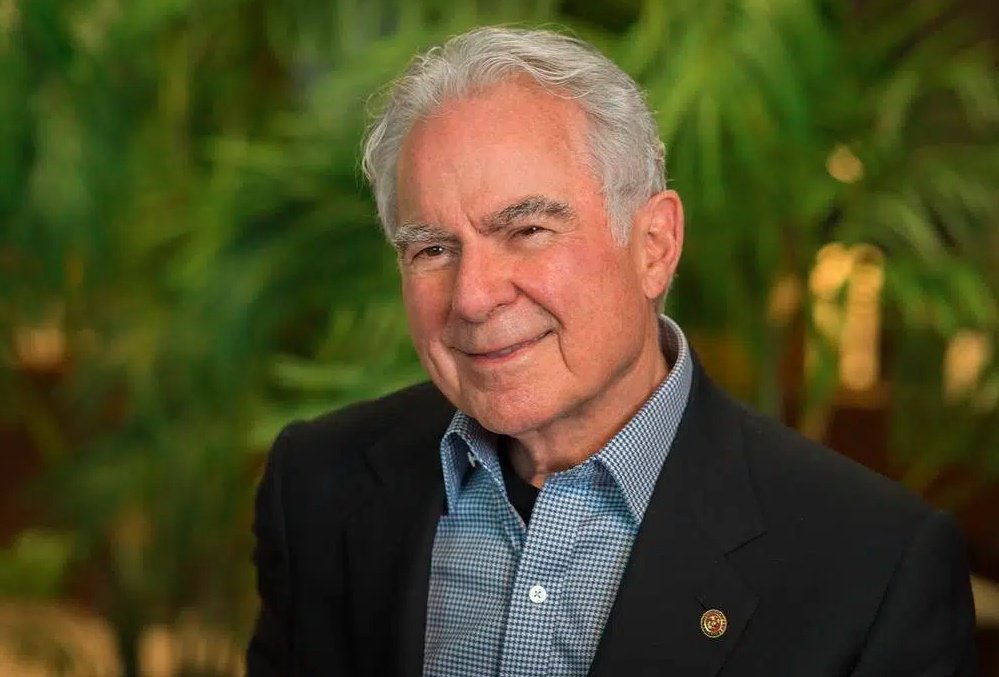
Alan gerry net worth is estimated at around $1.5 billion in 2026 — and that figure, reported by Forbes, makes him one of the oldest billionaires in the world. Alan Gerry, born on 24 December 1929 in Liberty, New York, built his fortune the slow way: he started with a two-man television repair shop in a converted grain elevator, wired his mountain hometown for cable because the television signal could not reach it, and spent four decades turning that local fix into Cablevision Industries, the largest privately owned cable company in the United States. In 1996 he sold it to Time Warner for a reported $2.7 billion.
The honest answer to the question of alan gerry net worth is a hedged one, because no audited valuation of his finances has ever been published. Forbes has listed him at about $1.5 billion, ranking him around 2,600th among the world’s billionaires, and other trackers have landed on the same figure or close to it. He is 96 years old and turns 97 on 24 December 2026, and he is still alive — still chairman and chief executive of Granite Associates, the investment company he founded with the proceeds of the Cablevision sale.
Unlike the aggregator pages that copy one another’s guesses, this article separates what was documented from what was estimated. His birth in Liberty to Russian Jewish immigrants, his service in the U.S. Marine Corps, the 1951 repair shop, the 1956 founding of Liberty Video, the growth of Cablevision Industries to 64 cable systems in 18 states, the 1996 sale, and his philanthropy — including the rescue of the original Woodstock festival site — are matters of public record, documented by Wikipedia, Syracuse University, the Cable Center and Forbes.
His exact personal fortune is not. Where a number is an estimate, this article says so and names the source. That discipline is what makes the alan gerry net worth figure below worth trusting.
Alan Gerry Net Worth: The Honest Estimate
The most responsible way to state alan gerry net worth is as a single hedged figure with its source attached: approximately $1.5 billion, according to Forbes. The number has been strikingly stable. Forbes-derived profiles listed him at $1.5 billion in early 2025 and again in late 2026, with his global ranking moving only slightly, from around 2,600th to 2,634th, and his United States ranking at 844th. That stability is itself informative: a fortune built on a single sale thirty years ago, then managed quietly through a private investment company, does not jump around the way a tech founder’s stock-based wealth does.
No major financial outlet has ever published an audited breakdown of his assets. Gerry never took Cablevision Industries public, never disclosed his personal portfolio, and has given almost no interviews about his money. The $1.5 billion figure for alan gerry net worth is therefore an estimate built from the known size of the 1996 sale, the decades of investment returns since, and his reported philanthropy — not a verified balance sheet. This article treats it that way throughout.
There is one more reason to trust the alan gerry net worth figure more than most celebrity estimates, and one reason to be careful with it. The reason to trust it is that the underlying event is documented and enormous: a $2.7 billion sale of a company he owned more than 95 percent of, according to Encyclopedia.com. The reason to be careful is that the sale was paid largely in Time Warner stock, and what he kept after taxes, what he gave away, and how his later investments performed are all private. The $1.5 billion figure is the best public estimate available, and it should be read as exactly that.
Alan Gerry Quick Facts
| Detail | Information |
|---|---|
| Full name | Alan Gerry |
| Date of birth | 24 December 1929 |
| Age | 96, turning 97 on 24 December 2026 |
| Birthplace | Liberty, New York, United States |
| Nationality | American |
| Profession | Entrepreneur, cable television pioneer, investor |
| Known for | Founder of Cablevision Industries; sold it to Time Warner in 1996 |
| Estimated net worth | Approximately $1.5 billion, according to Forbes |
| Forbes rank | Around 2,600th globally; 844th in the United States |
| Source of wealth | Cable television, self-made |
| Company founded | Cablevision Industries (as Liberty Video, 1956) |
| The 1996 sale | $2.7 billion to Time Warner; 64 systems, 1.3 million subscribers, 18 states |
| Current role | Chairman and CEO of Granite Associates, L.P. (since 1996) |
| Spouse | Sandra E. Gerry, educator and former teacher |
| Children | Three — Annelise, Robyn and Adam Gerry |
| Residence | Sullivan County, New York |
The biographical facts in this table were documented by Wikipedia, Syracuse University, the Cable Center and Forbes. The net-worth line was an estimate drawn from Forbes, not an official financial record.
Why the $1.5 Billion Figure Was Easy to Defend
The case for the alan gerry net worth figure of around $1.5 billion starts with simple arithmetic. Gerry owned more than 95 percent of Cablevision Industries when he sold it, according to Encyclopedia.com, and the sale price was a reported $2.7 billion. Even after allowing for taxes, advisers’ fees and the fact that much of the payment came in Time Warner stock rather than cash, a seller who owned nearly the whole company would have walked away with a fortune well into nine figures.
Forbes estimated that he personally pocketed around $900 million from the deal. Thirty years of careful investing through Granite Associates, plus the compounding of whatever remained, makes $1.5 billion a plausible place for that fortune to sit today.
This figure is also easy to defend because it has barely moved. Trackers that listed him at $1.5 billion in January 2025 were still listing him at $1.5 billion in late 2026. A fortune that does not swing with the stock market usually belongs to someone whose wealth sits in private investments, property and cash rather than in a single listed stock — and that matches everything known about how Gerry has managed his money since 1996.
Why Other Trackers Disagree
Not every tracker agrees with Forbes on alan gerry net worth, and the disagreement is worth reporting honestly. One biography site, Luxlux, listed alan gerry net worth at $1.3 billion as of May 2023 — $200 million below the Forbes figure. That gap is small in percentage terms, about 13 percent, and it is the normal range of disagreement between estimators working from the same public facts with different assumptions about taxes, spending and investment returns.
There is also a smaller, older confusion worth clearing up. Some low-authority pages have mixed Gerry up with other wealthy men named Gerry, and one page even described him, wrongly, as being of Pakistani ethnicity. He was born in Liberty, New York, to Russian Jewish immigrants, as Wikipedia, Forbes and his own Cable Center oral history all record. Readers should ignore any profile that gets that basic fact wrong, because its numbers are unlikely to be any more reliable.
What Would Have Settled the Number
Nothing short of a disclosure from Gerry himself, or from Granite Associates, would settle the number to a single verified figure. He has never given one, and there is no reason to expect him to. He built his company privately, sold it privately, and has invested privately ever since. No public filing, probate record or Forbes audit has ever laid out his holdings.
Readers should therefore treat the approximately $1.5 billion alan gerry net worth figure as the answer, with Forbes as its source and the 1996 sale as its foundation. It is the most defensible estimate available, and it is honest about what it is: an estimate, not a fact.
How Alan Gerry Made His Money
Gerry’s income never came from a salary, a bonus or a stock option. It came from building one company, owning almost all of it, and selling it once — and then from investing the proceeds for thirty years. That structure explains both why alan gerry net worth is so large and why it is so hard to pin down: the fortune was made in a single transaction in 1996, and everything since has happened behind the closed doors of a private investment firm.
None of the income streams below came with public figures attached to each year. No annual revenue, profit or dividend from Cablevision Industries was ever published while Gerry owned it, because the company was private. This article will not invent yearly numbers. What follows is the documented shape of how the money was made.
1. The Television Repair Shop — The First Small Business
Gerry’s first business was a television sales, installation and repair shop, opened in 1951 in a converted grain elevator in his hometown of Liberty, New York. He was 21 years old, a high-school dropout who had served in the U.S. Marine Corps electronics programme and then studied television repair on the G.I. Bill. The shop was a two-man operation, and its economics were simple: sell a television, install it, and come back to fix it when it broke.
The shop taught him the lesson that built the fortune behind alan gerry net worth. Liberty sat in the Catskill Mountains, and the terrain blocked television signals from New York City. Customers who bought a set often could not watch it, which was bad for sales and worse for the repair business. Gerry’s answer was practical: he installed antennas on the tops of the surrounding mountains, gathering the signal and carrying it down to the homes in the valleys and on the hillsides that faced away from the city. He was solving his customers’ reception problem, and in doing so he stumbled into a far better business than selling television sets.
2. Liberty Video — The Community Antenna Idea
In 1954, a travelling salesman for cable supplier Jerrold Electronics introduced Gerry to an idea that changed everything: run coaxial cable from a master antenna to individual homes and charge a monthly fee for the service. Gerry did not hesitate. In 1956 he persuaded seven local businessmen to invest in a community-antenna television system, putting in $1,500 of his own money alongside $20,000 borrowed from the group, according to Syracuse University’s account of his life. The enterprise was called Liberty Video, and it was the foundation of everything that followed. For the full biographical record of his career, see the Alan Gerry Wikipedia page.
Liberty Video worked because of a simple insight that Gerry grasped earlier than almost anyone else in the business. A television set was a one-off sale, but a cable subscription was a monthly payment that arrived whether or not the customer bought anything new. He soon realised, as his Cable Center oral history records, that after an initial surge in television sales, the recurring cash flow from cable subscribers was where the real income lay. He opened a shop purely focused on television sales, then watched the subscription money overtake it.
The business grew the unglamorous way: one town at a time, one mountain antenna at a time, one subscriber at a time. Gerry’s early customers numbered in the hundreds — around 300 subscribers in Liberty itself, according to Encyclopedia.com — and every one of them paid a monthly fee. It was a small fortune in the making, built on wires strung through the Catskills.
3. Cablevision Industries — Buying Out the Partners and Expanding
In the early 1970s, Gerry bought out his original partners and expanded beyond Sullivan County into Pennsylvania and Massachusetts, renaming the company Cablevision Industries. The buyout mattered enormously for the story of alan gerry net worth: because he had never taken a major equity partner and never offered the company’s stock to the public, he owned more than 95 percent of it himself when a buyer eventually came calling.
The expansion was not just geographical. In the early 1980s, Gerry installed the East Coast’s first high-powered microwave delivery system, creating clusters of 100,000 homes, and he was among the first cable operators to deploy fibre-optic cable. He then pushed the company into Florida, the Carolinas and the Mid-Atlantic states. Each move followed the same logic as the first mountain antenna: find homes that could not get a good signal, lay the cable, and collect the monthly fee. Each move added subscribers, and each subscriber added to the monthly income that would one day become alan gerry net worth.
There is one confusion to clear up here, because it still trips up readers. Gerry’s Cablevision Industries was a different company from Cablevision Systems Corporation, the Long Island cable operator founded by Charles F. Dolan in 1973. Dolan, who also founded HBO, built his company around New York City and later sold it to Altice in 2016. Gerry built his in the Catskills and the rural east, and sold it to Time Warner in 1996. The similar names have caused endless mix-ups online, and any profile that credits Gerry with Dolan’s company — or with HBO — is wrong.
4. The $2.7 Billion Sale to Time Warner — The Single Windfall
In 1996, Gerry sold Cablevision Industries to Time Warner Cable for a reported $2.7 billion. At the time of the sale, the company was the eighth-largest cable operator in the United States and the largest privately owned cable company in the country, with 64 cable systems covering 1.3 million subscribers in 18 states and employing 2,500 people. It was the transaction that made alan gerry net worth a billionaire-scale number, and it remains one of the largest private-company sales in the history of American cable television.
The scale of the deal is easier when it is set against its beginnings. Forty years earlier, the business had been 300 subscribers in a single mountain town. By 1996 it served 1.3 million subscribers across 18 states. Gerry was 66 years old, and he had spent his entire adult life building the company. Because he owned more than 95 percent of it, the sale price was, to a first approximation, his money — paid largely in Time Warner stock, according to Encyclopedia.com, with Forbes estimating that he personally pocketed around $900 million from the deal.
One cable-industry history, Kathi Ann Brown’s Wired to Win, put the sale price lower, at $2.1 billion, but the $2.7 billion figure is the one reported by Wikipedia, Syracuse University and Encyclopedia.com, and this article uses it throughout. Either way, the sale was the defining financial event of Gerry’s life: a single transaction that converted four decades of monthly subscription fees into a fortune.
5. Granite Associates — Thirty Years of Quiet Investing
Gerry did not retire after the sale. In 1996 he founded Granite Associates, L.P., a diversified investment company focused on start-up companies in telephony and communications, and he has served as its chairman and chief executive ever since. The firm, headquartered in Ferndale, New York, a few miles from Liberty, invests in emerging communications technologies — the same world he had spent forty years building in.
Almost nothing is publicly known about Granite Associates’ portfolio. It is a private venture-capital firm, it publishes no accounts, and its individual investments are rarely announced. That secrecy is the main reason alan gerry net worth can only ever be estimated, never verified. What can be said is that the firm has kept Gerry in the communications business for a second career of nearly thirty years, and that the returns on its investments, whatever they were, are the reason the published estimates of his fortune have held steady at around $1.5 billion rather than shrinking.
The pattern — sell the company, then invest the proceeds — is one other founders followed too, and the career behind Bill Ford net worth shows a similar second act, with a sale funding a long investing career. But Gerry’s version was quieter than most. He never became a celebrity investor, never wrote a book about his methods, and never put his name on a fund that courted publicity. Granite Associates stayed small, private and local, and so did he.
Early Life and Education
Alan Gerry was born on 24 December 1929 in Liberty, New York, a village in Sullivan County in the Catskill region, to Russian Jewish immigrants. His father was a frozen-food distributor. The family was not wealthy, and the town was small and mountainous — two facts that shaped everything that followed, because the mountains were the reason Liberty could not get television, and the lack of money was the reason Gerry had to build his own way up.
He did not finish high school. Encyclopedia.com’s profile describes him plainly as a high-school dropout, and he never earned a college degree. After school he joined the U.S. Marine Corps, where he was placed in the electronics programme, and afterwards he studied television repair on the G.I. Bill. That training — practical, technical, hands-on — was the whole of his formal education, and it was enough. He later liked to say, as he once told Forbes, that “when you have a brilliant idea, nobody is going to ask your diploma.”
One detail from his early life deserves care. Encyclopedia.com gives his birth year as 1928, while Wikipedia, Alchetron and Forbes all give 24 December 1929. This article uses 1929 throughout, because it is the date supported by the majority of sources and by his own Cable Center oral history, and because it is the date Forbes uses in its billionaire profile.
What was documented was that he grew up in Liberty, learned electronics in the Marines, and came home to a town where television barely worked. The repair shop he opened in 1951 was not a grand plan. It was a young man with a practical skill, in a town that needed it — and nothing in that start suggested the fortune that alan gerry net worth would one day describe.
Career Journey
The career behind alan gerry net worth was long, patient and unusually steady for a self-made fortune. Gerry did not have a breakthrough year or a viral moment. He had forty years of laying cable, town by town, and then one sale. The journey below follows that path from a grain elevator in Liberty to the largest privately owned cable company in America.
1951–1956: The Repair Shop and the Mountain Antennas
Gerry’s working life began in 1951, when he opened his television sales, installation and repair business in a converted grain elevator in Liberty. He was 21, and the business was a two-man operation. The work was physical and local: sell the set, carry it up a mountain road, install the antenna, and come back when the picture failed.
The reception problem was the business problem. Liberty’s mountains blocked the signal from New York City, and customers on the wrong side of a hill got nothing at all. Gerry’s answer was to put big antennas on the mountaintops and run cable down to the homes below. It was a repairman’s fix, not a strategist’s plan — and it turned out to be the founding idea of his fortune.
1956–1970s: Liberty Video and the Subscription Insight
In 1956, after the Jerrold Electronics salesman showed him the community-antenna idea, Gerry raised $20,000 from seven local businessmen, added $1,500 of his own money, and founded Liberty Video. The company ran coaxial cable from a master antenna on a mountaintop to individual homes, charging each household a monthly fee.
The insight that carried the company was about the shape of the income. Selling a television paid once. A subscription paid every month, for as long as the customer stayed connected. Gerry understood that early, and he built the business around it. The subscriber count grew slowly at first — around 300 in Liberty itself — and then steadily, as he wired one town after another in Sullivan County and beyond.
Early 1970s–1980s: Buying Out the Partners and Going Multi-State
In the early 1970s, Gerry bought out his original partners, took full control, and expanded into Pennsylvania and Massachusetts, renaming the company Cablevision Industries. The buyout was the most important financial decision of his life after the founding itself, because it left him owning more than 95 percent of the company that would one day sell for billions.
The 1980s brought the technology leaps. He installed the East Coast’s first high-powered microwave delivery system, grouping homes into clusters of 100,000, and he moved early into fibre-optic cable, years before most of his competitors. The company pushed into Florida, the Carolinas and the Mid-Atlantic, and by the end of the decade it was a genuinely national operator built from a mountain-town start.
1996: The Sale
In 1996, at the age of 66, Gerry sold Cablevision Industries to Time Warner Cable for a reported $2.7 billion. The company he sold had 64 cable systems, 1.3 million subscribers in 18 states and 2,500 employees, and it was the eighth-largest cable operator in the country and the largest privately owned one. The sale ended his forty-year run as a cable operator, and it fixed the number that alan gerry net worth still rests on.
1996–2026: Granite Associates and the Quiet Decades
The thirty years since the sale have been the quietest part of Gerry’s life, at least in public. He founded Granite Associates in 1996 and has run it as chairman and chief executive ever since, investing in start-up companies in telephony and communications from an office in Ferndale, New York, a few miles from where he was born. He has stayed in Sullivan County, stayed close to the community he came from, and stayed out of the spotlight — a billionaire who never moved to Manhattan, never bought a sports team, and never became a television personality.
Major Achievements
Gerry’s achievements were the documented milestones of a forty-year career, and they explain why the conversation about alan gerry net worth exists at all. A high-school dropout who built the largest privately owned cable company in America from a two-man repair shop had achieved something rare, and the honours that followed recognised it.
The first achievement was Cablevision Industries itself. He built it from around 300 subscribers in one mountain town into 64 cable systems serving 1.3 million subscribers in 18 states, and he did it without ever taking the company public or giving up control. At the time of the 1996 sale it was the eighth-largest cable company in the United States and the largest privately owned one — a scale no other founder of a rural cable system ever reached.
The second achievement was technical. In the early 1980s he installed the East Coast’s first high-powered microwave delivery system and was among the first operators to deploy fibre-optic cable. Those were not publicity gestures. They were engineering decisions that let a rural cable system serve 100,000-home clusters efficiently, and they kept his company ahead of better-funded competitors for a decade.
The third achievement was the sale. The reported $2.7 billion that Time Warner paid in 1996 was one of the largest private-company sales in the history of American cable television, and because Gerry owned more than 95 percent of the company, it was overwhelmingly his money. Business Insider later named him one of the 20 top billionaires who started from nothing — a fair description of a man who began in a converted grain elevator.
The fourth achievement was the honours list. In 1995 he received the Vanguard Award, cable television’s honour for distinguished leadership. In 1998 he received the Golden Plate Award of the American Academy of Achievement. In 2000 he was inducted into the Cable Television Hall of Fame. He also received the Entrepreneur-of-the-Year Award from the New England chapter of the Institute of American Entrepreneurs, the Distinguished Citizen Award from the Boy Scouts of America, and the Americanism Award from the Anti-Defamation League, along with honorary doctorates from Roger Williams University and the State University of New York.
The fifth achievement was the one he built after the money: Bethel Woods. In 1997 he bought the site of the original 1969 Woodstock festival and turned it into the Bethel Woods Center for the Arts, a concert venue and museum in Bethel, New York. It was a different kind of achievement from the cable company — a cultural one — and it is the part of the alan gerry net worth story that most people outside the cable industry actually know.
Gerry’s rise belongs to a small group of founders who built lasting fortunes from unglamorous beginnings without a university degree or a wealthy backer, a group that also includes the entrepreneur behind Bill Bonner net worth, whose self-made path through publishing rather than cable. What sets Gerry apart even within that group is the scale: few self-made founders have ever owned 95 percent of a company they sold for billions.
Assets and Lifestyle
There is almost nothing publicly documented about the assets behind alan gerry net worth, and that absence is itself informative. Gerry was never the subject of a celebrity property story, had no reported car collection, no yacht, no private jet on the public record, and no business filing for a personal company beyond Granite Associates. No property record, vehicle registration or business filing publicly ties him to a mansion or a fleet of cars, and this article does not invent any.
What can be said is that his lifestyle, as far as it is visible, is modest and local. He lives in Sullivan County, New York, not far from the place of his birth, in the same community where he opened his repair shop in 1951. His public appearances are rare, and they are usually tied to philanthropy — a hospital wing, a university building, a concert hall — rather than to luxury or display. He is, by every available account, a billionaire who stayed home.
That discretion is consistent with the published figure. A fortune built on a single sale and then managed quietly through a private investment firm does not need a visible portfolio of trophy assets to be real. The most valuable asset he is likely to own is the one that never appears in a net-worth table: his stake in Granite Associates and whatever that firm’s thirty years of investments have become. Anyone wondering how a single windfall, invested patiently over decades, grows into a lasting fortune can try a net worth calculator to see how years of compounding, even at modest returns, build wealth over time.
One more point deserves mention, even though it cannot be valued: his philanthropy is itself a kind of asset, in the sense that it is where a large part of the fortune has visibly gone. The $10 million gift to the National Cable Center in Denver, the $5 million for the Newhouse 2 renovations at Syracuse University, the endowed chair of orthopaedic surgery at Harvard Medical School, the Paul Gerry Dialysis Center in Sayre, Pennsylvania, and the wing he funded on his local hospital are all documented. They are spending, not holdings, but they are the most concrete evidence of what the Cablevision money became.
Alan Gerry’s Financial Setbacks
Most net-worth articles have a dramatic setbacks section — a fraud case, a bankruptcy, a divorce. Gerry’s story has no such scandal: there is no public record of him losing money to fraud, no lawsuit, no bankruptcy, no failed business venture and no expensive divorce. The absence of a financial disaster is not a gap in the research; it is the research result.
That does not mean his financial path was free of risk. The first real risk was structural, and it applied to the whole of his career. He bet everything on one company in one industry. For forty years, his entire fortune was Cablevision Industries. If cable television had been overtaken by a rival technology in the 1970s or 1980s, or if regulation had broken the economics of the business, there was no second company and no fallback career to protect him.
The second risk came with the sale itself. The $2.7 billion was paid largely in Time Warner stock, which meant that the fortune he had just crystallised was still tied to a single company’s share price. A sharp fall in Time Warner’s stock in the years after the sale would have cut deeply into what he kept. Forbes’ estimate that he personally pocketed around $900 million suggests that taxes, fees and the form of payment took a large share before the money was truly his.
The third risk was the simplest one: time. Gerry has now spent thirty years as an investor rather than an operator, and venture investing in start-up communications companies is a business where most bets fail. Granite Associates publishes no accounts, so no one outside the firm knows how its investments performed. The published estimates of alan gerry net worth have held steady at around $1.5 billion, which suggests the firm did well enough — but the record is private, and this article will not pretend otherwise.
None of this amounts to a financial disaster in the usual sense. It amounts to a fortune built on a single concentrated bet, converted into stock, and then managed quietly for thirty years by a man who chose privacy over publicity.
Personal Life
Gerry keeps his personal life private, and the public record reflects that choice. He is married to Sandra E. Gerry, an educator and former teacher, and they have three children: two daughters, Annelise and Robyn, and a son, Adam. The family lives in Sullivan County, New York, not far from Liberty, where Gerry was born and where he opened his first shop.
What is documented is that he stayed. He did not move to Manhattan after the sale, did not decamp to Florida or California, and did not trade his hometown for a more glamorous address. His philanthropy has followed the same pattern: the Gerry Foundation, which he created to stimulate economic activity and revitalisation in Sullivan County, the wing on his local hospital, and the Bethel Woods Center for the Arts a short drive from Liberty are all investments in the place he came from. He is also involved in a programme at Boston University working to find a cure for amyloidosis.
He has given almost no interviews about his private life, and this article does not repeat the speculation about his family that appears on low-authority biography sites. That privacy is one more reason the published alan gerry net worth figure has stayed an estimate rather than a verified fact. What the record shows is a man who made billions and spent the decades afterwards in the same county where he started, with the same wife, close to the same community.
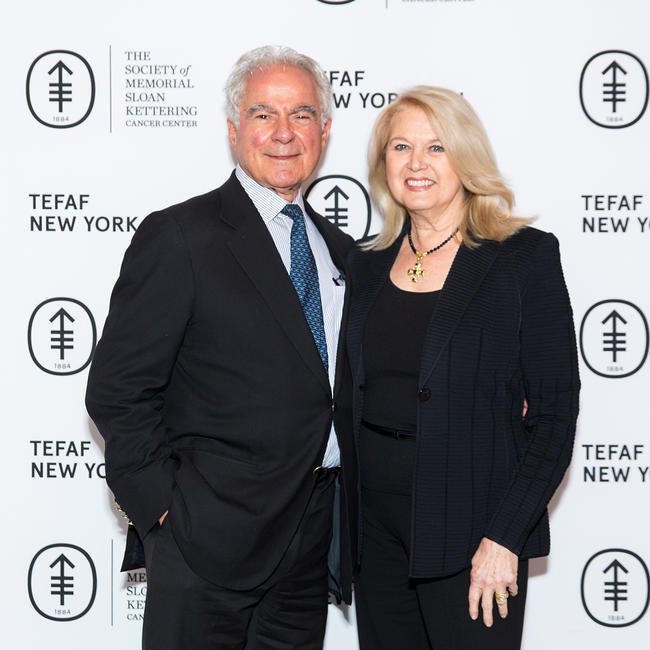
Alan Gerry Net Worth Growth Timeline
No audited year-by-year record of his fortune exists, and this article will not invent one. What follows instead is a qualitative timeline: the documented events that built his wealth, in order, without invented numbers.
| Period | Financial context |
|---|---|
| 1929–1950 | Born in Liberty, New York, to Russian Jewish immigrants; father a frozen-food distributor. Left school without a diploma; served in the U.S. Marine Corps electronics programme; studied television repair on the G.I. Bill. No income of note. |
| 1951–1955 | Opened a two-man television sales, installation and repair shop in a converted grain elevator in Liberty. Installed mountaintop antennas to fix the town’s poor reception. Modest shop income. |
| 1956 | Founded Liberty Video with $1,500 of his own money and $20,000 from seven local businessmen. First community-antenna system; around 300 subscribers in Liberty. Recurring monthly fees began. |
| 1956–early 1970s | Grew Liberty Video town by town across Sullivan County and beyond, on the strength of monthly subscription income rather than one-off television sales. |
| Early 1970s | Bought his original partners out and expanded into Pennsylvania and Massachusetts, renaming the company Cablevision Industries. Took ownership above 95 percent. |
| Early 1980s | Installed the East Coast’s first high-powered microwave delivery system and moved early into fibre-optic cable; expanded into Florida, the Carolinas and the Mid-Atlantic. Subscriber base grew into the hundreds of thousands. |
| 1995 | Received the Vanguard Award, cable television’s honour for distinguished leadership. |
| 1996 | Sold Cablevision Industries to Time Warner Cable for a reported $2.7 billion — 64 systems, 1.3 million subscribers, 18 states, 2,500 employees. Founded Granite Associates, L.P., as chairman and CEO. |
| 1997 | Bought the original 1969 Woodstock festival site and began building the Bethel Woods Center for the Arts. |
| 1998–2000 | Received the Golden Plate Award (1998); inducted into the Cable Television Hall of Fame (2000). |
| 2000s–2010s | Ran Granite Associates as a private venture investor in communications start-ups; philanthropy included $10 million to the National Cable Center and a Harvard Medical School chair. No public financial disclosures. |
| 2014 | Donated $5 million for renovations at the Newhouse 2 complex at Syracuse University; the Alan Gerry Center for Media Innovation bears his name. |
| 2025–2026 | Forbes-derived profiles list his fortune at about $1.5 billion, ranking him around 2,600th globally. Still chairman and CEO of Granite Associates; still living in Sullivan County, New York. |
This timeline separates documented career events from uncertain financial valuations. The wealth behind alan gerry net worth was built in the middle rows — the repair shop, the Liberty Video subscriptions, the multi-state expansion and the 1996 sale — and it has been managed, quietly and privately, in the long rows that followed.
Interesting Facts About Alan Gerry’s Wealth
The most interesting fact about alan gerry net worth is how ordinary its beginnings were. The fortune started in a converted grain elevator, with a two-man repair shop, in a mountain town where television barely worked. Business Insider later named him one of the 20 top billionaires who started from nothing, and the description fits: there was no family money, no university network and no early investor with deep pockets — just $1,500 of his own money and $20,000 borrowed from seven neighbours.
Another interesting fact is how much of the company he owned. Because he never took a major equity partner and never offered Cablevision stock to the public, he owned more than 95 percent of the business when Time Warner bought it. Most founders dilute their stake across funding rounds until they own a fraction of what they built. Gerry did the opposite: he bought his partners out and kept the company for himself.
A third fact is the form the money took. The $2.7 billion sale was paid largely in Time Warner stock, not cash, which meant that the fortune was, at the moment of the sale, still a bet on a single company’s shares. Forbes estimated that he personally pocketed around $900 million from the deal — a reminder that a headline sale price and the cash a seller keeps are two different numbers.
A fourth fact is the Woodstock connection. In 1997, a year after the sale, Gerry bought the farm in Bethel, New York, where the original 1969 Woodstock festival had taken place, and turned it into the Bethel Woods Center for the Arts. The man who wired the Catskills for cable ended up owning the most famous field in American music history — and he built a concert hall and a museum on it.
A fifth fact is his line about education. A high-school dropout who became a billionaire, Gerry once told Forbes that “when you have a brilliant idea, nobody is going to ask your diploma.” It is the most quoted sentence of his life, and it is also the most misleading if it is read as advice: his success rested on forty years of technical work, not on a single idea.
A sixth fact is his age. Born on 24 December 1929, Gerry is 96 years old and turns 97 on Christmas Eve 2026, which makes him one of the oldest billionaires on the Forbes list. He has been a billionaire for thirty years, and he has spent those thirty years running a small private investment firm from a village a few miles from where he was born.
FAQs
What is Alan Gerry’s net worth in 2026?
Alan gerry net worth is estimated at approximately $1.5 billion in 2026, according to Forbes. The figure has been stable across recent Forbes-derived profiles, with his global ranking at around 2,600th. No audited valuation exists, so the figure is a published estimate rather than a verified fact.
How did Alan Gerry make his money?
Gerry made his money by founding Cablevision Industries, a cable television company he built from a small community-antenna system in Liberty, New York, into the largest privately owned cable operator in the United States, with 64 systems and 1.3 million subscribers in 18 states. He sold it to Time Warner in 1996 for a reported $2.7 billion, and he has invested the proceeds since then through Granite Associates, the investment firm he founded the same year.
How much did Alan Gerry sell Cablevision Industries for?
He sold Cablevision Industries to Time Warner Cable in 1996 for a reported $2.7 billion. At the time, the company was the eighth-largest cable operator in the United States and the largest privately owned one, with 64 cable systems covering 1.3 million subscribers in 18 states and 2,500 employees. One cable-industry history put the price lower, at $2.1 billion, but the $2.7 billion figure is the one reported by Wikipedia, Syracuse University and Encyclopedia.com.
Is Alan Gerry still alive?
Yes. Alan Gerry is alive and, at 96, still serves as chairman and chief executive of Granite Associates, L.P., the investment company he founded in 1996. He lives in Sullivan County, New York, near his birthplace of Liberty.
How old is Alan Gerry?
Alan Gerry was born on 24 December 1929, which makes him 96 years old; he turns 97 on 24 December 2026. One source, Encyclopedia.com, gives his birth year as 1928, but Wikipedia, Alchetron and Forbes all give 24 December 1929, and this article uses that date.
What is Granite Associates?
Granite Associates, L.P. is a diversified investment company founded by Gerry in 1996 with the proceeds of the Cablevision sale. It focuses on start-up companies in telephony and communications, and Gerry has served as its chairman and chief executive since its founding. It is a private firm based in Ferndale, New York, and it publishes no accounts.
Was Alan Gerry’s Cablevision the same company as Charles Dolan’s Cablevision?
No. Gerry’s Cablevision Industries, founded as Liberty Video in 1956 in upstate New York, was a different company from Cablevision Systems Corporation, the Long Island cable operator founded by Charles F. Dolan in 1973. Dolan also founded HBO. Gerry sold his company to Time Warner in 1996; Dolan’s company was sold to Altice in 2016. The similar names cause frequent confusion online.
What did Alan Gerry do with the Woodstock site?
In 1997 Gerry bought the original 1969 Woodstock festival site in Bethel, New York, from its then-owners and turned it into the Bethel Woods Center for the Arts, a concert venue and museum. He also created the Gerry Foundation to stimulate economic activity and revitalisation in Sullivan County, New York.
Who is Alan Gerry’s wife?
Alan Gerry is married to Sandra E. Gerry, an educator and former teacher. They have three children: daughters Annelise and Robyn, and a son, Adam. The family lives in Sullivan County, New York.
Why do different sites give different figures for Alan Gerry’s net worth?
Because no official figure exists, every published number is an estimate built from assumptions about the 1996 sale, taxes, spending and thirty years of private investment returns. Forbes and Forbes-derived profiles list alan gerry net worth at about $1.5 billion, while one 2023 tracker listed $1.3 billion. Different estimators make different assumptions, so they reach different totals, and the published range is roughly $1.3 billion to $1.5 billion.
Final Takeaway
Alan gerry net worth is best understood as a hedged figure — approximately $1.5 billion, according to Forbes — built on a single extraordinary transaction and protected by thirty years of quiet investing. His fortune was not the product of a lucky stock pick, a viral moment or a family inheritance. It was the accumulated result of a television repair shop in a grain elevator, a $1,500 bet on a community antenna in 1956, four decades of monthly subscription fees, a buyout that left him owning more than 95 percent of his own company, and a $2.7 billion sale to Time Warner in 1996.
The more interesting story is what he did with it. At 66, Gerry was a billionaire who could have retired anywhere in the world. He stayed in Sullivan County, founded a small investment firm a few miles from where he was born, bought the Woodstock site and turned it into an arts centre, and gave millions to hospitals, universities and his own community. He never became a celebrity, never wrote a memoir about his methods, and never put his fortune on display.
Whether the true figure sits nearer $1.3 billion or at the $1.5 billion quoted by Forbes, the foundation behind alan gerry net worth is already in place: the man who wired a mountain town for cable because the signal would not reach it, the founder who owned nearly all of the company he built, and the investor who spent thirty years compounding the proceeds in private. His net worth has barely moved in recent years, because he stopped chasing it. His name, on the other hand, is fixed in the history of American cable television — and that was the rarer achievement.
To explore more articles and updates about net worth and financial guides, feel free to check our Home Page.

Pingback: Peter Orszag Net Worth 2026: The Honest $10–$25M Range Behind the Lazard CEO