
Art Cashin
Art cashin net worth is most often reported at around $10 million at the time of his death in December 2024, according to Celebrity Net Worth, and that single reported figure is the honest starting point for this article. It is an estimate, not an audited balance sheet. No public filing, probate record, or family statement has confirmed a precise total for his assets and debts, so presenting a larger or more exact number as fact would overstate what is known.
What makes art cashin net worth interesting is not the size of the estimate. Against billionaire financiers, about $10 million is modest. What makes it worth understanding is how it was built: slowly, over six decades, by a man who started work as a teenager, joined the exchange at 23, stayed on its floor for life, and became a trusted voice explaining markets to ordinary viewers. It is a story of longevity, seniority, and reputation, not one big deal.
This article looks at art cashin net worth in that wider context. It separates what is documented — his roles, employers, long-running newsletter, and decades on television — from what is merely estimated, and explains why websites differ, why weaker sources give $10 million to $20 million, and why the most cited figure remains Celebrity Net Worth’s $10 million. Nothing here is financial advice, nor a claim about private investments, property, or family finances never made public.
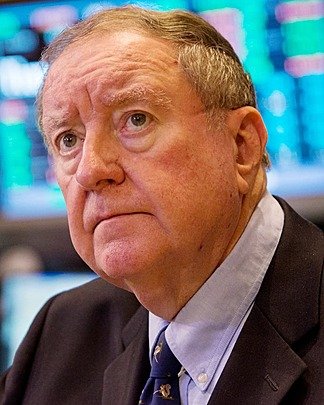
Table of Contents
Who Is Art Cashin?
Arthur D. Cashin Jr., known simply as Art Cashin, was an American financier, market commentator, and longtime director of floor operations for UBS Financial Services at the New York Stock Exchange. To television viewers he was the calm, plain-speaking man who could explain a confusing market day in a few clear sentences. To floor colleagues he was more: a market historian, exchange governor, mentor to younger traders, and keeper of its traditions, jokes, and unwritten rules.
Cashin was born in Jersey City, New Jersey, in 1941, and died in December 2024 at 83. Reports of his death, first carried by CNBC and then by Reuters, described a career spanning more than six decades. UBS called him a true giant of the industry, and the exchange marked his death with a moment of silence on the trading floor — a tribute showing how colleagues regarded him, not merely as a long-serving employee but as a fixture of the place.
For readers searching for art cashin net worth, the important distinction is between fame and fortune. Cashin was famous within finance, but he was not a hedge-fund billionaire, a company founder who sold a business, or a celebrity endorser. His public profile came from explaining markets, not from promoting products or building a personal brand empire. That distinction matters when judging art cashin net worth, because his income most plausibly came from senior salaried and managing-director roles and decades of steady employment at major firms, rather than from a single windfall.
He was also widely described as the dean of the New York Stock Exchange, and The Washington Post once called him Wall Street’s version of Walter Cronkite, the trusted television news anchor. The comparison was about trust and steadiness, not wealth: viewers turned to Cashin because he had lived through crashes, political shocks, and technological change, and could place a new event in a longer story without panic or hype.
Quick Facts
Before the details, one caution frames everything that follows: art cashin net worth is a reported estimate, so the table below separates documented career facts from the single estimated figure at the end.
| Detail | Information |
|---|---|
| Full name | Arthur D. Cashin Jr. |
| Known as | Art Cashin |
| Born | March 7, 1941, Jersey City, New Jersey, United States |
| Died | December 2024, aged 83 |
| Nationality | American |
| Best known for | Director of Floor Operations for UBS at the New York Stock Exchange; CNBC market commentator; author of Cashin’s Comments |
| Career span | More than six decades, from 1959 to 2024 |
| First Wall Street job | Thomson McKinnon, 1959 |
| NYSE member | From 1964, aged 23 |
| Key employers | Thomson McKinnon; P.R. Herzig & Co.; PaineWebber (from 1980); UBS (after PaineWebber was acquired in 2000) |
| Final senior role | Managing Director of UBS Financial Services; Director of Floor Operations at the NYSE |
| Television role | Regular CNBC commentator for more than 25 years; segment known as Art Cashin on the Markets |
| Newsletter | Cashin’s Comments, published daily for more than 25 years, with some accounts putting its run at more than 40 years |
| NYSE governance | Governor of the NYSE; member of the Market Performance Committee; Vice Chairman of the NYSE Hearing Committee; one of three senior executive floor governors |
| Spouse | Joan Cashin, who died in 1998 |
| Reported net worth | Around $10 million at death, according to Celebrity Net Worth (estimate only; other weak sources suggest a range up to about $20 million) |
| Cause of death | Not publicly disclosed in the UBS memo or initial reports |
Early Life
Art Cashin grew up in Jersey City, New Jersey, in a working-class household; according to CNBC obituary material, his parents were superintendents of an apartment building. He did not arrive on Wall Street as the son of a banking family. He arrived as a local teenager who found work, learned the floor from the bottom up, and stayed.
He began his business career at Thomson McKinnon in 1959, still a teenager and, according to some accounts, still in high school. Starting as an assistant clerk — a very different entry point from today’s graduate schemes — shaped how he later talked about markets. He learned by watching older traders and being present on days when history happened, rather than only from textbooks, and his storytelling style, a short anecdote carrying a larger lesson, grew directly from that apprenticeship.
His early years also included an experience that stayed with him: the assassination of President John F. Kennedy on November 22, 1963. Cashin later told of being upstairs in the order room while the market sold off, hearing that Merrill Lynch was selling heavily, and only then learning, through the news ticker’s triple bell for major news, that shots had been reported in Dallas. The exchange shut down. For Cashin, the lesson was about how information travels and how professionals read behaviour before headlines — markets, he believed, are people reacting to incomplete information, not machines processing perfect data.
Another early influence was a mentor he called Professor Jack, an over-the-counter trader in silver stocks. Cashin retold Jack’s advice from the early 1960s, when rumours spread that missiles were flying: sit down, buy him a drink, and buy rather than sell — because if you are wrong, the trade will never clear. It was a dark joke with a serious point about panic, and it became one of his most repeated lessons. Stories like these were not decoration; they were his method, and they help explain why art cashin net worth is discussed alongside his teaching as much as his trading.
For anyone trying to understand art cashin net worth, his early life sets a realistic baseline. He did not begin with inherited wealth, and there is no documented record of an early fortune. His financial position was built over decades of employment, not inherited or won in a single trade — which is why a reported figure around $10 million, accumulated over sixty-plus years at senior levels, is plausible even though it remains unverified in detail.
Career
Joining the Exchange at 23
In 1964, at 23, Cashin became a member of the New York Stock Exchange and a partner of P.R. Herzig & Co. — strikingly young for such a position, and repeatedly described in obituaries as one of the youngest members of his era. Membership then mattered in a way hard to grasp today, when most trading is electronic: a seat was professional standing, a place on the floor, and a gateway to handling orders and building relationships. For Cashin it was also a lifelong commitment.
The floor he joined was loud, physical, and intensely social, and Cashin thrived in it. He was known for rumpled suits, old-fashioned ties, a battered flip phone long after smartphones became standard, and a desk piled with papers. That unpretentious image made him approachable to journalists, younger traders, and viewers alike.
His governance roles grew out of that standing: governor of the NYSE for several terms, member of its Market Performance Committee, Vice Chairman of its Hearing Committee, one of three senior executive floor governors, and a member of the Bond Club of New York. These were not ceremonial titles. Governors helped oversee the exchange, its rules, and its response to disorderly markets, and that trust, earned over many years, supported a long senior career — and, indirectly, art cashin net worth.
PaineWebber and UBS
In 1980, Cashin joined PaineWebber and took charge of managing its floor operation, anchoring the second half of his career. Running a major firm’s floor operation meant responsibility for how its orders were handled, how its traders worked, and how the firm presented itself daily on the exchange. It was a senior operational role, not headline deal-making, and it suited his strengths: organisation, relationships, judgement under pressure, and deep knowledge of how the floor worked.
When PaineWebber was acquired by UBS in 2000, Cashin continued as Director of Floor Operations for UBS Financial Services at the NYSE and a managing director of the firm, holding that role for the rest of his career. For more than four decades, first at PaineWebber and then at UBS, he was responsible for a major firm’s presence on the floor. That rare continuity helps explain both his influence and the steady accumulation behind art cashin net worth: long tenure at managing-director level, even without a public salary disclosure, is consistent with a comfortable but not extravagant fortune.
Readers who follow long business careers will recognise a similar pattern in other profiles on this site, such as Cody Campbell, where a fortune is built over years of steady senior work rather than a single breakthrough. The comparison is useful because it prevents a common mistake: assuming that a well-known name in finance must be worth hundreds of millions. In Cashin’s case, the public record points to a senior professional’s wealth, not a founder’s windfall, and the reported estimate reflects that.
Cashin’s Comments
Alongside his floor duties, Cashin wrote a daily newsletter called Cashin’s Comments. Reuters reported that it had been published for more than 25 years with a daily circulation of more than 100,000 readers, while other accounts, including NPR and Legacy, put its run at more than 40 years and its reach at times as high as an estimated 2 million people a day. The difference between those figures probably reflects different periods, different ways of counting readers and forwarded copies, and the newsletter’s long life. What is not in doubt is that it was one of the most widely read daily market notes on Wall Street.
Its style was distinctive. Each edition typically began with a historical note — what had happened on that date in an earlier year — and connected it to the day’s market, mixing analysis with trivia, history, and even recipes. Traders read it not only for numbers but for a way of thinking about the day ahead.
The newsletter also mattered commercially, in a quiet way. A daily note read by tens of thousands of professionals strengthened Cashin’s standing inside UBS and supported his television work. There is, however, no public evidence that he sold it separately for a fortune or that it generated a disclosed personal income stream. Its value was most likely indirect — reputation, seniority, and job security. That caution is exactly how art cashin net worth should be discussed: by naming what is documented and refusing to invent a revenue line no source provides.
CNBC and Art Cashin on the Markets
Cashin was a regular on CNBC for more than 25 years, delivering stock market commentary and analysis to viewers, often live from the floor. His segment, Art Cashin on the Markets, aired several times a week for more than two decades. For most viewers, this was how they knew him: a familiar face and voice who could say, in plain language, whether a sell-off looked orderly or panicked, what traders on the floor were actually doing, and what history suggested might happen next.
Television changed his audience without changing his method. He explained price discovery through the tale of jeweler Charles Lewis Tiffany and J.P. Morgan: Tiffany sent Morgan a diamond stickpin priced at $5,000, Morgan countered with $4,000, Tiffany declined, then found Morgan had enclosed a check for the full $5,000 with the note, “Just checking the price.” Value, for Cashin, was not a formula but what the other person will actually accept — a lesson as relevant to understanding art cashin net worth as to trading, since both depend on judgement rather than a single number.
His television presence gave him a public profile few floor professionals achieve, and journalists called him for context on volatile days. That profile did not prove art cashin net worth, and no public record discloses what, if anything, he was paid separately for television appearances; many senior commentators appear as part of their firm’s public role. Television raised his profile and reinforced his senior standing, a plausible contributor to a reported fortune around $10 million, but its exact contribution cannot be separated from his UBS compensation in any public source.
Governance, Tradition, and the Floor Community
Beyond his formal roles, Cashin was a guardian of floor traditions. For decades, after trading halted each day, he gathered with a group of friends, first at the bar of the NYSE luncheon club and later across the street at Bobby Van’s Steakhouse in Manhattan. The group became known for storytelling, argument, and companionship, and Cashin was at its centre. He also led the group in singing a 1905 song on Christmas Eve and New Year’s Eve, a small ritual that connected the modern floor to its history.
These traditions explain why his death was felt as the end of an era. The floor changed profoundly during his career, from open-outcry crowds to electronic trading, yet Cashin kept telling the older stories because he believed they still taught useful lessons about human behaviour in markets.
His community role also had a serious public dimension after September 11, 2001. Cashin was in lower Manhattan that morning, walked through ash-filled streets, and later chaired the NYSE Fallen Heroes Fund, supporting families of first responders killed in the line of duty. That charitable work shows where his standing was directed: toward colleagues, families, and the institution he served, not self-promotion.
Earnings and Income Sources
So how, in practical terms, might art cashin net worth have reached a reported level of around $10 million? The answer has to be built from the shape of his career, because no audited breakdown exists. The most defensible account runs as follows, with each element labelled for what it is: documented role, plausible inference, or unknown.
First, senior employment income. Cashin held senior and managing-director-level roles for decades, culminating as UBS Director of Floor Operations. Senior roles at major firms typically carry substantial salaries and, often, bonuses and benefits, although individual terms are private. Over sixty-plus years, with more than forty in senior floor leadership at PaineWebber and UBS, even a moderate senior income, saved and invested, could accumulate into a multi-million-dollar position. This is the most important contributor to the reported estimate, and the least precisely documented, because firms do not publish individual managing-director pay.
Second, longevity itself. Working continuously from his teens into his eighties gave Cashin far more earning years than a typical professional, and he was still working, writing, and appearing on television in his eighties. Market growth over decades would have had a long time to work on any savings, although no public record quantifies his personal investments — another reason art cashin net worth can only be estimated, never stated precisely.
Third, professional standing and media work. His newsletter and CNBC appearances strengthened his position inside UBS and made him a recognised authority. Whether they added separate, disclosed income is unknown, and this article does not claim they did. A trusted name is, however, more likely to retain a senior role through mergers and market changes, so reputation was, indirectly, an income-protecting asset.
Fourth, what is not in the record. No documented evidence in the sources reviewed shows Cashin founding a company, selling a business, holding a disclosed large equity stake, earning a fortune from a single trade, or receiving a major book or speaking windfall, although his stories were later excerpted in a book by CNBC correspondent Bob Pisani. That absence does not prove he had no investments or side income, only that no reliable source quantifies them. A responsible estimate therefore stays close to the senior-career explanation and treats $10 million as a rounded, third-party estimate, not a sum of verified parts.
Another useful comparison comes from a fellow profile in this series: Big Pluto, whose overnight viral rise contrasts sharply with Cashin’s six-decade climb. The careers differ in detail, but the lesson is similar: reported net worth figures summarise years of work, and hide as much as they reveal about how money was earned and kept.
It is also worth explaining why art cashin net worth is quoted differently across the web. Celebrity Net Worth, the most widely cited source, puts it at $10 million at his death and notes its figures are estimates from public sources. An older 2020 profile gave $11 million, consistent with rounding rather than contradiction, while weaker aggregators give $10 million to $20 million without explaining their method. None publishes an audited breakdown, and none should be quoted as if it had seen his bank statements. The safest summary is this: the best-known estimate is around $10 million, other weak sources suggest up to about $20 million, and the true figure, if it differs, is not publicly known.
Assets and Lifestyle
Cashin’s lifestyle, as described by colleagues and journalists, was notably unflashy for a man who spent six decades at the centre of American finance: rumpled suits, old-fashioned ties, a battered flip phone, a famously untidy desk, and an after-work steakhouse across from the exchange rather than an advertised private club. None of this proves a bank balance, but it suggests a man tied to work, conversation, and routine rather than visible luxury spending.
On documented assets, honesty requires a short answer: very little is publicly documented. No reliable source reviewed provides a verified list of properties, a portfolio breakdown, or a car collection for Cashin, and this article does not invent one. That gap is common for senior professionals who were not celebrities in the usual sense; their homes, savings, and investments stay private unless disclosed or sold in a verifiable public record, which Cashin does not appear to have done.
What can be said, in general and hedged terms, is that art cashin net worth of around $10 million, if accurate, would most plausibly reflect savings from decades of senior income, retirement arrangements typical of long service at a major firm, and personal investments, less taxes, living costs, and family expenses. That describes how such a figure could arise, not specific accounts. Readers should be wary of any website listing a house price, car model, or investment holding for Cashin without a public record, because none was found in the sources used here.
His family life deserves respect rather than speculation. He was married to Joan Cashin, who died in 1998 from cancer, according to Times Now’s obituary summary. Reports also mention a son, Peter, in his September 11 account. Beyond those public mentions, this article does not speculate about family finances or private arrangements, because none are documented.
The broader point about art cashin net worth and lifestyle is that modesty in presentation and steadiness in work are consistent. A man who kept the same flip phone, steakhouse routine, and daily newsletter for decades was not chasing displays of wealth; by every account, he was chasing the next good story, the next clear explanation, and the next day on the floor. If the reported $10 million estimate is broadly right, it reads less like a fortune spent on display and more like the accumulated result of a very long, steady professional life.
Financial Setbacks and Challenges
Cashin’s career also included public challenges that had nothing to do with personal bankruptcy or scandal, and it is important not to confuse professional difficulty with financial ruin. There is no documented record in the sources reviewed for this article of Cashin declaring bankruptcy, facing a personal financial fraud case, or losing a fortune in a single failed investment, and this article does not suggest otherwise. His setbacks were of a different kind: the slow disappearance of the world he had mastered, and the personal losses and public tragedies that marked his long life.
The first challenge was technological change. The open-outcry floor he joined in the 1960s gradually gave way to electronic trading, raising an obvious question for a director of floor operations: what is the floor for, when machines match orders faster? Cashin’s answer was to emphasise what machines could not do as well — judgement, history, relationships, and calm explanation of a disorderly market — becoming more valuable as a commentator and historian even as the floor’s mechanical role shrank.
The second challenge was political and personal. In the mid-1970s, according to CNBC obituary material, Cashin ran for mayor of Jersey City, motivated in part by disgust at local corruption. He did not win and returned to Wall Street — a setback for an ambition, not for his career, and one that reinforced his reputation for plain speaking and civic concern.
The third challenge was September 11, 2001, both a personal trauma and a professional crisis. Cashin was near the World Trade Center when the towers fell, and the exchange had to close and reopen in extraordinary circumstances. As chair of the Fallen Heroes Fund afterwards, he helped direct support to families who had lost far more than he had — a reminder that market history is also human history.
Finally, there were the ordinary setbacks of any long career: crashes, panics, and bear markets. Cashin’s response, as captured in his stories, was to look for the human reason behind a move rather than panic or claim certainty. That temperament may itself have protected his finances, though this is an inference about character, not a documented investment record.
Taken together, these challenges explain why art cashin net worth should not be described in dramatic boom-and-bust language. His was a career that survived technological revolution, political disappointment, terrorist attack, and many market cycles, and that survival is itself the financial story.
Career Timeline
This timeline is qualitative by design. It records roles, employers, and documented events in order, without inventing year-by-year wealth figures that no source provides — the only honest way to present art cashin net worth across a six-decade career.
1941 — Born in Jersey City. Arthur D. Cashin Jr. is born on March 7, 1941, in Jersey City, New Jersey, to parents who worked as superintendents of an apartment building.
1959 — First Wall Street job. Still a teenager, Cashin begins work at Thomson McKinnon, starting as an assistant clerk and learning the business from the floor up.
Early 1960s — Learning from mentors. He works alongside older traders, including the silver-stock trader he called Professor Jack, and absorbs lessons about panic, price, and human behaviour that he will retell for decades.
November 22, 1963 — The Kennedy assassination. In the order room, Cashin watches the market sell off and learns, through the news ticker and a broker’s call, that President Kennedy has been shot in Dallas. The exchange shuts down — a defining story about how information really travels.
1964 — NYSE member at 23. Cashin becomes a member of the New York Stock Exchange and a partner of P.R. Herzig & Co., one of the youngest members of his era.
Mid-1970s — Run for mayor. Disgusted by corruption in Jersey City, Cashin runs for mayor of his hometown. He is not elected and returns to Wall Street.
1980 — Joins PaineWebber. Cashin joins PaineWebber and takes charge of managing its floor operation, the senior operational role that will define the second half of his career.
1990s onwards — Cashin’s Comments grows. His daily newsletter reaches a wide professional audience; by the time he meets CNBC correspondent Bob Pisani in 1997, he has written it for nearly twenty years, and later accounts put its run at more than 40 years.
Late 1990s onwards — CNBC regular. Cashin becomes a regular CNBC commentator, a role he will hold for more than 25 years, including the segment Art Cashin on the Markets several times a week for more than two decades.
2000 — PaineWebber acquired by UBS. PaineWebber is acquired by UBS, and Cashin continues his floor leadership as Director of Floor Operations for UBS Financial Services at the NYSE and a managing director of the firm.
September 11, 2001 — Attacks and aftermath. Cashin is in lower Manhattan during the terrorist attacks, walks through ash-filled streets, and later chairs the NYSE Fallen Heroes Fund supporting families of first responders killed in the line of duty.
2019 — The Cronkite comparison. The Washington Post profiles Cashin as Wall Street’s version of Walter Cronkite. Cashin jokes that he owes an apology to Cronkite, a self-deprecating response typical of his style.
2022 — Stories collected. Bob Pisani’s book, Shut Up and Keep Talking, draws on Cashin’s stories and lessons, preserving many anecdotes retold here.
December 2024 — Death at 83. UBS announces Cashin’s death in a staff memo on December 2, 2024, and CNBC reports it the same day. The exchange holds a moment of silence on the floor, and tributes describe a career of more than six decades.
This timeline shows why any single-year wealth figure for Cashin would be misleading. His standing was built across all of these stages, and no public source tracks his personal finances stage by stage. The qualitative timeline is therefore more honest than a fabricated table of rising numbers, and it gives readers a clearer sense of how a reported estimate at the end of a long life can be understood.
Interesting Facts
Cashin’s life is full of details more memorable than any net worth figure, and they help explain why he is still quoted, remembered, and missed — which is why readers asking about art cashin net worth often stay for the stories, not just the estimate.
First, a spaghetti dish was named after him. At Eberlin’s, a Wall Street restaurant founded in 1872, the mid-1960s menu listed “Spaghetti (a l’Arthur Cashin)” for $2.75. It was, he later explained, a hangover cure: Eberlin’s opened at 6:00 a.m., traders came in for something to eat, and his preferred breakfast was spaghetti in red sauce. He refused, decades later, to give Bob Pisani the recipe, joking he was not sure his family knew it either.
Second, he kept a battered flip phone long after smartphones became universal — a small, deliberate statement, alongside rumpled suits and old-fashioned ties, that the phone was for calling people, not display.
Third, he taught through parables rather than lectures. He told a story about Tiffany and Morgan to explain price discovery, one about Professor Jack to explain panic, and one about a Merrill Lynch manager in Dallas to explain how professionals read behaviour before headlines — a method journalists loved because a Cashin story could be retold by viewers who had never traded a share.
Fourth, he led singing on the floor’s great occasions. Every Christmas Eve and New Year’s Eve, Cashin led his friends in singing a song from 1905, a ritual linking the modern exchange to its past and capturing his role as keeper of institutional memory.
Fifth, his desk was legendary for its mess. Papers piled up until colleagues joked it resembled a recycling bin — in fact the working archive of a man who kept clippings and historical references close at hand for the next day’s newsletter, and usually knew exactly where to find an example from 1918 or 1929.
Sixth, he witnessed many of the most important days in modern market history from the same vantage point — the floor itself — from the Kennedy assassination to September 11, and through electronic trading and many crashes and recoveries. That continuity is why obituaries called him a historian as often as a trader.
Seventh, he was generous with his time for younger people, mentoring traders, journalists, and writers and reading long manuscripts for friends. Danielle DiMartino Booth paid tribute to his mentorship after his death, calling him King Arthur and describing his market-history knowledge as irreplaceable. A fortune measured only in dollars would miss that goodwill entirely.
Frequently Asked Questions
1. What was Art Cashin’s net worth at the time of his death?
Art cashin net worth was reported at around $10 million at the time of his death in December 2024, according to Celebrity Net Worth. That art cashin net worth figure is an estimate based on public sources, not an audited valuation, and it has not been confirmed by his family or by UBS.
2. Is the $10 million figure confirmed?
No. No public filing or family statement confirms a precise total. Celebrity Net Worth itself describes its figures as estimates drawn from public sources, with private tips where provided. Readers should treat $10 million as the best-known reported estimate, not as a verified fact.
3. Why do some websites give a higher figure?
Some weaker aggregator sites give a range of about $10 million to $20 million for art cashin net worth, and an older profile from 2020 gave $11 million. These differences most likely reflect rounding, different update dates, and different assumptions about senior pay, savings, and investments over a very long career. None publishes an audited breakdown, so the range should be read as uncertainty, not evidence of a larger hidden fortune.
4. How did Art Cashin make his money?
He made it, as far as the public record shows, through decades of senior employment: Thomson McKinnon and P.R. Herzig & Co., then PaineWebber from 1980, then UBS after 2000, where he was Director of Floor Operations and a managing director. His newsletter and CNBC appearances strengthened his standing, but no public source discloses a separate income figure for either.
5. Was Art Cashin a billionaire?
No. Nothing in the public record suggests he was a billionaire. The reported art cashin net worth estimate of around $10 million places him among successful senior professionals, not among founders, fund managers, or celebrity investors worth hundreds of millions or billions.
6. Did Art Cashin own a company or sell a business?
There is no documented evidence that he founded a company or sold a business for a large sum. His career was built inside major firms — Thomson McKinnon, PaineWebber, and UBS — rather than through founder-style entrepreneurship, although his category here reflects his standing as a senior business figure. His wealth, if the estimate is broadly right, came from employment, seniority, and longevity.
7. What was Cashin’s Comments?
Cashin’s Comments was his daily market newsletter, published for more than 25 years according to Reuters, with some accounts putting its run at more than 40 years. It combined analysis with history, trivia, and stories, and was read by more than 100,000 people a day according to Reuters, with later accounts estimating a larger forwarded readership.
8. How long was Art Cashin on CNBC?
He was a regular on CNBC for more than 25 years, with his segment Art Cashin on the Markets airing several times a week for more than two decades. He became known to viewers as a calm, plain-speaking explainer of market days, live from the trading floor.
9. When did Art Cashin join the New York Stock Exchange?
He became a member of the New York Stock Exchange in 1964, at 23, and a partner of P.R. Herzig & Co., remaining associated with the exchange for life as a governor, Market Performance Committee member, and Vice Chairman of its Hearing Committee.
10. How can I estimate net worth in general?
Net worth is what a person owns minus what they owe: savings, investments, and property, less mortgages, loans, and debts. Because private debts and taxes are rarely public, outside estimates are always approximate. To work through your own figures, a free net worth calculator can help you add up assets and subtract liabilities. This is general information only, not financial advice.
11. What is Art Cashin’s legacy?
His legacy is less about a dollar figure than about how markets should be explained. He taught through stories, warned against panic, showed how professionals read behaviour before headlines, and kept floor traditions alive through decades of technological change. Tributes after his death, including a moment of silence on the floor, reflected that legacy more than any estimate could.
12. Why does art cashin net worth still get searched in 2026?
Because Cashin remains a reference point for anyone learning about the history of the trading floor, and because his death in December 2024 renewed interest in his life. People searching in 2026 are often looking for a simple answer to a simple question — how much was he worth? — and the honest answer remains the reported estimate of around $10 million, with the important qualification that it is an estimate, not a confirmed total.
Final Takeaway
Art Cashin’s story is a reminder that not every important figure in finance is a billionaire, and not every fortune worth studying is enormous. If the reported estimate behind art cashin net worth is broadly right, his roughly $10 million was earned the slow way: by starting young, staying put, doing senior work well for decades, and becoming the person others trusted to explain what was happening when markets turned confusing. That is a less dramatic story than a sudden windfall, but it is a more useful one for ordinary readers, because it is built on habits — longevity, steadiness, reputation, and calm judgement — rather than on luck or a single bet.
It is also a story about the limits of net worth figures. A number like $10 million for art cashin net worth can summarise a career, but it cannot capture a newsletter read by generations of traders, a television presence that calmed viewers on volatile days, a fund for fallen heroes’ families, or a spaghetti dish named after a young trader at Eberlin’s. Those details are the real legacy, and why Cashin is still remembered and missed.
For more profiles of business figures and market personalities, explored with the same care about what is documented and what is merely estimated, visit Worthlino. Every figure here should be read as this article asks you to read Cashin’s: a starting point for curiosity, checked against its sources, never mistaken for a Readers who follow art cashin net worth closely will find the same steady, long-career pattern behind the headline figure. That steady pattern is why art cashin net worth remains a useful case study for readers who value longevity over sudden windfalls. For that reason, art cashin net worth is best quoted with its source and date, rather than as a single settled total.
bank statement.
Disclaimer: All net worth figures in this article are third-party estimates based on publicly available information. They have not been audited or confirmed by Art Cashin’s family, estate, or former employers. This article is for informational purposes only and does not constitute financial advice.

Pingback: Arthur Falcone Net Worth 2026: The Remarkable Fortune of Florida's Mega-Developer - worthlino