
Bela Fleck Net Worth 2026: The Remarkable $2 Million Banjo Fortune
Bela fleck net worth is most often reported at around $2 million, according to the online biography sites that track his career, and that reported figure is the honest starting point for this article. It is an estimate, not an audited balance sheet. Fleck has never publicly confirmed a personal fortune, and no tax filing, company account, or reputable financial publication has verified a precise total, so any article that presented a larger or more exact number as fact would be overstating what is actually known.
What makes bela fleck net worth so interesting is not only the size of the estimate. It is the shape of the story behind it: a musician who took a five-string banjo — an instrument many people associate with one narrow style of American folk music — and carried it into jazz, classical concert halls, African villages, and Indian classical music, winning 19 Grammy Awards along the way.
This article looks at his fortune in that wider context. It separates what is documented — his birth, his bands, his albums, his Grammy wins, and his long touring life — from what is merely estimated, and it explains why a musician of his stature can be reported at around $2 million while pop stars with far fewer honours are reported at ten times as much. Nothing here is financial advice.
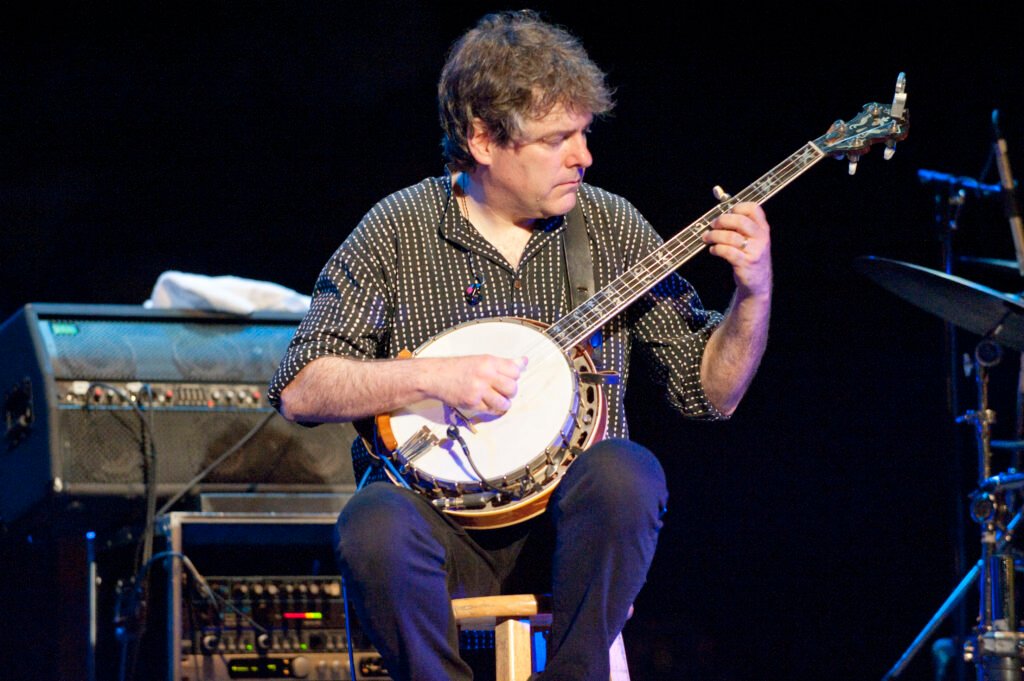
Table of Contents
Who Is Bela Fleck?
Bela Fleck — full name Béla Anton Leoš Fleck — is an American banjo player, composer, and bandleader, born on July 10, 1958, in New York City. He is widely described as the most innovative banjo player of his generation, and the Recording Academy’s own pages confirm the scale of his achievement: he has been nominated for Grammy Awards in more categories than any other musician.
His career spans five decades, from street corners in New York to concert halls with full symphony orchestras. He first became known in progressive bluegrass with New Grass Revival, then became famous worldwide as the leader of Béla Fleck and the Flecktones, a band that mixed bluegrass, jazz, funk, and world music into something no one had quite heard before.
For readers searching for bela fleck net worth, the important distinction is between artistic standing and commercial scale. Fleck is a giant in his field, but his field is instrumental music, not pop. There is no single hit song behind his fortune, and no blockbuster album that sold millions of copies in a year. His wealth, such as it is reported, was built slowly, over nearly fifty years of recording, touring, composing, and collaborating.
That distinction matters when judging his reported fortune, because it explains why a 19-time Grammy winner can be reported at around $2 million rather than tens of millions more. The estimate reflects a long working life in a niche genre, not a short burst of chart fame, and it has to cover taxes, touring costs, band expenses, and a life in music that has always put curiosity ahead of commerce.
He is also a family man whose private life has stayed mostly out of the headlines. He is married to fellow banjo player Abigail Washburn, and the couple have two young sons. They live and work in Nashville, Tennessee, where Fleck has been based for much of his adult life. Like the cello duo whose story is told in 2Cellos, Fleck proves that an instrumental act can build a lasting international career without ever chasing the pop charts.
Quick Facts
Before the details, one caution frames everything that follows: his fortune is a reported estimate, so the table below separates documented career facts from the single estimated figure at the end.
| Detail | Information |
|---|---|
| Full name | Béla Anton Leoš Fleck |
| Pronunciation | “BAY-luh” |
| Born | July 10, 1958, New York City, United States |
| Age | 68 in 2026 |
| Nationality | American |
| Named after | Béla Bartók, Anton Webern, Leoš Janáček |
| Instrument | Five-string banjo |
| Genres | Bluegrass, jazz, classical, folk, world music |
| Years active | 1976–present |
| First solo album | Crossing the Tracks (1979) |
| Best-known band | Béla Fleck and the Flecktones (formed 1988) |
| Former band | New Grass Revival (1982–1989) |
| Grammy Awards | 19 wins (as of the 2025 ceremony) |
| Grammy nominations | More than 40 |
| Grammy categories | More than any other musician |
| Hall of Fame | International Bluegrass Music Hall of Fame (2020, with New Grass Revival) |
| Wife | Abigail Washburn, banjo player and singer |
| Children | Two sons, born 2013 and 2018 |
| Based in | Nashville, Tennessee |
| Reported net worth | Around $2 million (estimate only; no audited figure published) |
Early Life: A New York Boy and a Television Theme Tune
Béla Fleck was born into a Jewish family in New York City on July 10, 1958. His father, who loved classical music, named him after three composers he admired: the Hungarian Béla Bartók, the Austrian Anton Webern, and the Czech Leoš Janáček. It was an unusual name for a child growing up in New York, and it turned out to be a fitting one for a musician who would spend his life moving between musical worlds.
He did not grow up in a bluegrass household. He grew up in the city, surrounded by classical music and by the sounds of New York, and the banjo came to him almost by accident. As a teenager, he heard Earl Scruggs playing the theme tune to the television comedy The Beverly Hillbillies, and something about that bright, rolling sound caught his attention and would not let go.
Fleck was around fifteen years old when he first picked up a banjo. His grandfather bought him the instrument in 1973, and from that point on, the banjo became the centre of his life. He studied the book Bluegrass Banjo by Pete Wernick, and he took lessons from respected players including Erik Darling, Marc Horowitz, and Tony Trischka. He was not a natural prodigy who could simply pick the instrument up and play; he was a determined student who worked hard at a difficult instrument.
He attended the High School of Music and Art in New York, a school for talented young musicians, and there he began the habit that would define his whole career: taking the banjo somewhere it had not been before. While other banjo students were learning traditional bluegrass tunes, Fleck was already working on adapting bebop — the fast, complex jazz of Charlie Parker and Dizzy Gillespie — for an instrument that had never been designed to play it.
That early choice tells us a great deal about the man behind bela fleck net worth. He was never trying to become the most commercially successful banjo player in the world. He was trying to find out what the banjo could do. That curiosity made him famous among musicians, and it won him more Grammy Awards than almost anyone else alive, but it also meant that his career would be built on concerts, recordings, and collaborations rather than on hit records.
After finishing school, Fleck moved to Boston, where he joined a bluegrass group called Tasty Licks and recorded two albums with them. It was his first professional band, and it gave him his first taste of life as a working musician: rehearsals, small venues, long drives, and the slow business of building a reputation one gig at a time.
In 1979, only about five years after he first picked up the banjo, Fleck released his debut solo album, Crossing the Tracks. The readers of Frets magazine chose it as Best Overall Album, an early sign that other musicians were paying attention to this young New Yorker with the unusual ideas about the banjo. It was not a commercial breakthrough — instrumental banjo albums rarely are — but it was a critical one, and it opened doors.
New Grass Revival: Learning to Lead a Band
In 1982, Fleck joined New Grass Revival, a progressive bluegrass band led by mandolin player Sam Bush. The group was already known for pushing bluegrass beyond its traditional limits, mixing in rock, jazz, and country, and Fleck fitted in at once. He stayed with the band until the end of the decade, and those seven years shaped him as a band member, a composer, and a performer.
New Grass Revival was not a pop act, but it was a serious touring band with a loyal following. The group played bluegrass festivals, concert halls, and clubs across America, and Fleck learned how a working band actually survives: by touring constantly, by selling records at the merchandise table, and by building a fan base that would come back year after year. Three of the tunes he wrote for the band — “Seven by Seven,” “Big Foot,” and “Metric Lips” — were nominated for Grammy Awards, an early sign of the honours that would follow him for the rest of his life.
In 1984, he played on Snakes Alive!, an album by the Dreadful Snakes, alongside Jerry Douglas, Roland White, and Blaine Sprouse. In 1987, he recorded another solo album, Drive, which was nominated for a Grammy Award in 1988 in the then-new category of Best Bluegrass Album. Step by step, album by album, he was building a reputation as a musician who could be trusted to deliver something original every time.
By the time New Grass Revival came to an end in 1989, Fleck was ready to lead a band of his own. He had spent a decade learning how touring worked, how records were made, and how audiences responded to new ideas. The next step would change his life, and it would also change the course of bela fleck net worth, because it gave him a band with a name, a sound, and a following of its own.
Béla Fleck and the Flecktones: The Band That Changed Everything
The Flecktones began in 1988, when Fleck met harmonica and keyboard player Howard Levy at the Winnipeg Folk Festival and bassist Victor Wooten. The two men set out to find a drummer to complete the band, and they found one in Wooten’s brother, Roy “Future Man” Wooten, who played an instrument he had invented himself: the Drumitar, a drum-and-guitar hybrid played with drumsticks on a guitar-shaped synthesizer. It was a strange line-up on paper — banjo, bass, harmonica, and a homemade electronic drum — but on stage it worked brilliantly.
The band’s first album, Béla Fleck and the Flecktones, was released in 1990 on Warner Bros., and it was immediately noticed. Here was a band that could play bluegrass, jazz, funk, and rock in the same song, sometimes in the same minute, without ever sounding confused. The album earned a Grammy nomination, and the band quickly built a following among jazz fans, jam-band fans, and bluegrass fans alike — three audiences that rarely agreed on anything, but agreed on the Flecktones.
Their second album, Flight of the Cosmic Hippo, released in 1991, did even better. It reached number one on the Billboard Top Contemporary Jazz Albums chart, and it earned another Grammy nomination. For an instrumental band led by a banjo, topping a jazz chart was a remarkable achievement, and it showed that Fleck’s gamble on a new kind of band had paid off.
The Flecktones went on to release a string of acclaimed albums through the 1990s and 2000s, including UFO Tofu in 1992, Three Flew Over the Cuckoo’s Nest in 1993, Live Art in 1996, Left of Cool in 1998, Outbound in 2000, Little Worlds in 2003, and The Hidden Land in 2006. The band’s sound kept evolving, and its line-up changed over the years — Howard Levy left and later returned, saxophonist Jeff Coffin joined for a long spell — but the core idea never changed: four musicians listening hard to each other and taking the banjo somewhere new.
The Grammy Awards followed the band wherever it went. The Flecktones won a Grammy for Best Pop Instrumental Performance for “The Sinister Minister,” and Outbound won Best Contemporary Jazz Album. Left of Cool won a Grammy for Best Instrumental Composition for the track “Almost 12.” The Hidden Land won Best Contemporary Jazz Album. Their Christmas album, Jingle All the Way, released in 2008, won Best Pop Instrumental Album at the 2009 Grammys. All told, the group has won five Grammy Awards of its own, as part of Fleck’s much larger total.
In 2011, Fleck reunited the original Flecktones line-up for the album Rocket Science, and the band toured to celebrate it. They later announced a break from regular touring, but they have reunited several times since, including tours in 2016 and 2017 and a 30th-anniversary tour that began with a big “Friends and Family” show at Red Rocks near Denver. The band’s story is not a story of a sudden split or a bitter ending; it is a story of musicians who built something lasting and return to it whenever the time is right.
The Flecktones matter enormously to bela fleck net worth, because touring with the band was his main source of income for more than thirty years. Fleck himself has said, in interviews reported by fellow musicians, that there was never much money in record sales and that touring was where the Flecktones had to make their money. That is the reality of a working band: the album is the advertisement, and the concert is the business. A sold-out theatre, night after night, is what pays the band, the crew, the travel, and the hotels — and what is left over, after all of that, is the profit.
What Made the Flecktones Different?
The Flecktones were different because they refused to stay in one box. A bluegrass band plays bluegrass. A jazz band plays jazz. The Flecktones played both, and funk, and rock, and world music, and they did it with a banjo in the lead. That made them hard to market — record shops did not know which shelf to put them on — but it also made them impossible to forget. That genre-crossing reach is part of why bela fleck net worth is discussed as a career built on range and longevity rather than on one hit or one style.
Perpetual Motion: The Banjo Goes Classical
In 2001, Fleck released Perpetual Motion, an album of classical music played on the banjo, recorded with double bassist Edgar Meyer. It was a bold idea: take pieces by Bach, Debussy, and other classical composers, and play them on an instrument that classical audiences had never taken seriously. The result was one of the most acclaimed albums of Fleck’s career.
Perpetual Motion won two Grammy Awards in 2002, for Best Classical Crossover Album and for Best Arrangement, for Fleck and Meyer’s arrangement of Debussy’s “Doctor Gradus ad Parnassum.” For a banjo player to win a classical Grammy was almost unheard of, and it confirmed what Fleck’s fans already knew: there was no style of music he could not play, and play well.
Fleck and Meyer went on to compose a double concerto for banjo and bass, which they performed with the Nashville Symphony Orchestra. Fleck also premiered his Concerto for Banjo in Nashville on September 22, 2011, performing it with the full Nashville Symphony Orchestra. He has now written and performed three banjo concertos for full symphony orchestra, a body of work that no other banjo player in history can match.
Classical work does not pay like pop work, but it pays in a different way. Concertos bring commissions, orchestral fees, and invitations to perform with major orchestras around the world. They also bring prestige, and prestige brings more work: festival appearances, teaching invitations, and recording projects. For bela fleck net worth, the classical years added a steady, respected income stream alongside the Flecktones’ touring, and they proved that Fleck’s talent could open doors in rooms where a banjo had never been welcome before.
Throw Down Your Heart: The Journey to Africa
In 2008, Fleck travelled to Africa to trace the origins of the banjo, an instrument whose ancestors came to America with enslaved African people. The journey became a documentary film, Throw Down Your Heart, directed by his half-brother Sascha Paladino, and a series of albums recorded with more than forty African musicians, including Toumani Diabaté, Baaba Maal, Vusi Mahlasela, Bassekou Kouyate, and Oumou Sangare, in countries including Tanzania, Gambia, Mali, and Uganda.
The film and the album Throw Down Your Heart: Tales from the Acoustic Planet, Vol. 3 — Africa Sessions, released in 2009, won two Grammy Awards in 2010. A follow-up album of unreleased tracks was nominated again in 2011, and the complete sessions were nominated for Best Historical Album in 2021. It was one of the most ambitious projects of Fleck’s career, and one of the most personal: he was not just visiting Africa as a tourist, he was going home to the roots of his instrument.
The Africa project also shows the other side of bela fleck net worth. According to accounts shared by fellow banjo players, Fleck had to put up much of the money for the documentary himself, and it was a stretch — a dream project he could barely afford, rather than a safe commercial bet. That is a pattern in his career: he spends money on the music he believes in, even when the financial return is uncertain. It is the choice of an artist, not a businessman, and it helps explain why his reported fortune is modest by celebrity standards.

Collaborations: Chick Corea, Abigail Washburn, and the World
Fleck has never been a musician who works alone. Some of the most important chapters of his career are collaborations, and they are also some of the most rewarding parts of his working life — artistically, if not always financially.
His partnership with the great jazz pianist Chick Corea lasted for many years. The two men toured as a duo, recorded three acclaimed albums together, and became close friends. Their first duo album, The Enchantment, was released in 2007. Their final duo album, Remembrance, recorded remotely during the pandemic and released in 2024, documented their last tour together in 2019, before Corea’s death. Remembrance won the 2025 Grammy Award for Best Jazz Instrumental Album, and that win took Fleck’s career total to 19 Grammy Awards.
Fleck’s most personal collaboration is with his wife, Abigail Washburn. Washburn is a clawhammer banjo player and singer from Evanston, Illinois, who first planned to become a lawyer working on United States–China relations before music took over her life. She moved to Nashville, joined the old-time band Uncle Earl, and became a respected solo artist in her own right.
The couple met at a square dance in Nashville, where she was dancing and he was playing. Fleck produced her first solo album, Song of the Traveling Daughter, released in 2005, and they married in 2009. They have since recorded and toured together as a duo, and their self-titled album Béla Fleck & Abigail Washburn, released in 2014, won the Grammy Award for Best Folk Album in 2016. Their follow-up, Echo in the Valley, released in 2017, was recorded at home in Nashville, in a house that also holds a recording studio.
In 2023, Fleck released As We Speak, an album recorded with tabla master Zakir Hussain, double bassist Edgar Meyer, and bansuri flutist Rakesh Chaurasia. The album, released by Thirty Tigers in May 2023, won two Grammy Awards in 2024: Best Contemporary Instrumental Album and Best Global Music Performance, for the track “Pashto.” It was yet another new direction — Indian classical music, played by a banjo, a tabla, a bass, and a bamboo flute — and yet another reminder that Fleck’s curiosity has no limits.
Readers who enjoy stories of musicians who built a career slowly, far from the pop charts, may also like the story of Jesús de Miguel.
In February 2024, he released Rhapsody in Blue, his interpretation of George Gershwin’s famous piece, recorded with the Virginia Symphony Orchestra under Eric Jacobsen. The album was released on February 12, 2024, exactly one hundred years to the day after Gershwin’s piece premiered in New York City in 1924. Fleck performed the work at Carnegie Hall with an orchestra in 2024, and his solo banjo arrangement of the piece was the opening performance at the 2025 Grammy Awards ceremony. The album was nominated for Best Contemporary Instrumental Album at the 2025 Grammys.
How Bela Fleck Makes Money: Earnings and Income Sources
So how, in practical terms, might bela fleck net worth have reached a reported level of around $2 million? The answer has to be built from the shape of his career, because no audited breakdown exists. The most defensible account runs as follows, with each element labelled for what it is: documented work, plausible inference, or unknown.
First, touring. For a working instrumental musician, live performance is the main income. Fleck has toured almost continuously since the late 1970s, with New Grass Revival, with the Flecktones, as a duo with Chick Corea, as a duo with his wife, and with his many other ensembles. A theatre or festival fee, multiplied across dozens of dates a year and shared with a band and crew, is real money — but it is not pop-star money, and touring costs eat a large share of it.
Second, album sales and streaming royalties. Fleck has released dozens of albums, as a solo artist, with the Flecktones, and with collaborators. His catalogue earns royalties year after year, and his Grammy-winning albums continue to sell. But instrumental albums sell in far smaller numbers than pop albums, and streaming pays a fraction of a cent per play. Royalties are a steady trickle, not a flood, and that is an important part of the story behind bela fleck net worth.
Third, composing and orchestral work. His concertos, commissions, and performances with symphony orchestras bring fees that a club date cannot match. Teaching, masterclasses, and instructional work also add income: Fleck is one of the most studied banjo players in the world, and his methods and transcriptions are widely used by students. None of these income streams is publicly quantified, and this article does not invent figures for them.
It is also worth explaining why bela fleck net worth is quoted differently across the web. The most commonly repeated figure, around $2 million, appears on biography sites such as Biography Talks and Mabumbe, which describe their numbers as estimates. Another site, CelebsMoney, gives a much wider range of $100,000 to $1 million. None of these sites publishes an audited breakdown, and none should be quoted as if it had seen his bank statements. The safest summary is this: the best-known estimate is around $2 million, a lower estimate puts the range below $1 million, and the true figure, if it differs, is not publicly known.
Assets and Lifestyle
Fleck’s lifestyle, as shown in his public work, is that of a focused professional musician rather than a flashy celebrity. His interviews and performances show rehearsals, recording sessions, and family life, rather than luxury cars or designer displays. None of this proves a bank balance, but it suggests a musician whose public image is built on his work, not on visible wealth.
On documented assets, honesty requires a short answer: very little is publicly documented. No reliable property listing, company filing, or personal disclosure sets out a portfolio of homes, cars, or business holdings in his name. The public record shows a Nashville base, a family home, and a studio that appears in accounts of his working life. Nothing in those accounts carries a public valuation, and no mortgage or land record has been used to build a figure for this article.
His personal life deserves the same care. He married Abigail Washburn in 2009, after the couple met at a square dance in Nashville. Their sons, Juno and Theo, were born in 2013 and 2018. Beyond those public facts, this article does not speculate about private family finances, because gossip-style reports are not a reliable basis for financial claims.
The broader point about bela fleck net worth and lifestyle is that discipline and curiosity are consistent. A musician who spent fifty years taking a banjo into jazz, classical music, Africa, and India was not chasing displays of wealth, and a reported estimate of around $2 million reads less like a fortune spent on display and more like the result of a long, hard-working musical life.
Financial Setbacks and Challenges
Fleck’s career has not included the kind of public financial scandal that marks some celebrity wealth stories. There is no documented fraud case, no bankruptcy filing, and no expensive divorce in his record. The challenges he has faced are quieter, and they are the challenges of his whole genre. That contrast matters for readers weighing bela fleck net worth, because a career without public financial scandals leaves the reported $2 million figure standing on documented work rather than controversy.
The first is the economics of instrumental music. A banjo player, however brilliant, does not earn pop-star money. There are no hit singles, no stadium tours, and no advertising campaigns built around an instrumentalist. Every dollar has to be earned one concert, one album, and one collaboration at a time, and that is a slower way to build wealth than a single hit record.
The second challenge is the cost of ambition. Projects like the Africa documentary required Fleck to spend his own money on a dream, with no guarantee that the film or the albums would earn it back. That is a risk most musicians cannot afford to take, and it is a reminder that artistic ambition and financial caution do not always point in the same direction.
Taken together, these challenges explain why bela fleck net worth should not be described in simple boom-and-bust language. His career rose steadily for five decades, peaked in honours rather than in money, and never depended on a single windfall. The money already earned is real, but it was earned slowly, and it was earned by playing music, night after night, for audiences who loved what they heard.
Career Timeline
This timeline is qualitative by design. It records roles, bands, albums, and documented events in order, without inventing year-by-year wealth figures that no source provides — the only honest way to present bela fleck net worth across a career of five decades.
1958 — Born in New York City. Béla Anton Leoš Fleck is born on July 10, 1958, and named after three classical composers.
1973 — First banjo. His grandfather buys him a banjo at around age fifteen, after he hears Earl Scruggs on television.
1979 — Debut solo album. Crossing the Tracks is released and chosen Best Overall Album by the readers of Frets magazine.
1982 — New Grass Revival. Fleck joins the progressive bluegrass band and stays with them until 1989.
1988 — Drive and the Flecktones. His solo album Drive is nominated for a Grammy, and he forms Béla Fleck and the Flecktones with Victor Wooten, Howard Levy, and Roy “Future Man” Wooten.
1990–1991 — First Flecktones albums. The band’s debut album is released in 1990, and Flight of the Cosmic Hippo reaches number one on the Billboard Top Contemporary Jazz Albums chart in 1991.
1996 — First Flecktones Grammy. “The Sinister Minister” wins Best Pop Instrumental Performance.
2001 — Perpetual Motion. His classical banjo album with Edgar Meyer wins two Grammy Awards.
2008–2009 — Africa. Fleck travels to Africa, films the documentary Throw Down Your Heart, and releases the Africa Sessions album, which wins two Grammys in 2010.
2009 — Marriage. Fleck marries fellow banjo player Abigail Washburn.
2011 — Banjo concerto. He premieres his Concerto for Banjo with the Nashville Symphony Orchestra.
2016 — Duo Grammy. Béla Fleck & Abigail Washburn wins Best Folk Album.
2020 — Hall of Fame. Fleck is inducted into the International Bluegrass Music Hall of Fame as a member of New Grass Revival.
2021 — My Bluegrass Heart. The album wins Best Bluegrass Album at the Grammys.
2023–2024 — As We Speak and Rhapsody in Blue. As We Speak wins two Grammys in 2024, and Rhapsody in Blue is released on the centenary of Gershwin’s premiere.
2025 — Nineteenth Grammy. Remembrance, his final duo album with Chick Corea, wins Best Jazz Instrumental Album, and BEATrio is released.
Interesting Facts
Fleck’s life is full of details more memorable than any net worth figure, which is why readers asking about bela fleck net worth often stay for the stories, not just the estimate.
First, he is named after three composers. Béla Bartók, Anton Webern, and Leoš Janáček all lent their names to a child who would grow up to play the banjo — an instrument none of them ever wrote for. That naming story is part of why bela fleck net worth searches often lead readers to the man behind the music, not just the figure.
Second, he was nominated for Grammy Awards in more categories than any other musician. Country, pop, jazz, bluegrass, classical, folk, spoken word, composition, and arranging are all on his list, a range no other artist has matched.
Third, he learned the banjo from a television theme tune. Hearing Earl Scruggs play The Beverly Hillbillies theme as a teenager set him on a path that led, fifty years later, to Carnegie Hall.
Fourth, he took the banjo to Africa to find its roots. The Throw Down Your Heart journey, through Tanzania, Gambia, Mali, and Uganda, traced the instrument back to its African ancestors.
Fifth, he recorded a classical album on the banjo. Perpetual Motion won two classical Grammys, an achievement almost unheard of for a banjo player, and it opened the doors of the concert hall to his instrument.
Sixth, his wife is also a banjo star. Abigail Washburn plays clawhammer banjo, sings, speaks fluent Chinese, and once planned to become a lawyer before music took over her life.
Seventh, he has won 19 Grammy Awards, including one Latin Grammy counted in some totals, from more than 40 nominations. His most recent win, for Remembrance with Chick Corea, came in 2025.
Eighth, at 68, he is still recording and touring. His 2025 album BEATrio, with harpist Edmar Castañeda and drummer Antonio Sanchez, was nominated for a 2026 Grammy, proving that his curiosity has not faded with age. That continued activity is another reason bela fleck net worth remains a live topic, with new work still adding to a career already spanning five decades.
Frequently Asked Questions
1. What is bela fleck net worth?
Bela fleck net worth is most commonly reported at around $2 million, according to online biography sites. That figure is an estimate based on public career information, not an audited valuation, and it has not been confirmed by Fleck himself.
2. Is the $2 million figure confirmed?
No. No tax filing, company account, or personal statement confirms a precise total. The sites that quote $2 million describe their figures as estimates, and another site gives a lower range of $100,000 to $1 million.
3. Why is bela fleck net worth so much lower than other Grammy winners?
Because Fleck works in instrumental music, not pop. He has no hit single, no stadium tour, and no blockbuster album. His income comes from touring, recording, composing, and collaborating over five decades, which builds wealth slowly.
4. How many Grammy Awards has Bela Fleck won?
He has won 19 Grammy Awards as of the 2025 ceremony, when Remembrance with Chick Corea won Best Jazz Instrumental Album. He has been nominated more than 40 times, in more categories than any other musician.
5. How does bela fleck net worth compare with his career earnings?
Career earnings and net worth are different things. Fleck has earned money from touring and recording for nearly fifty years, but taxes, band costs, travel, and living expenses reduce what is kept. No public source gives a lifetime earnings total, so no precise comparison is possible.
6. What is Béla Fleck and the Flecktones?
It is the band Fleck formed in 1988 with Victor Wooten, Howard Levy, and Roy “Future Man” Wooten. The group mixes bluegrass, jazz, funk, and world music, has won five Grammy Awards, and topped the Billboard jazz chart with Flight of the Cosmic Hippo.
7. Who is Bela Fleck’s wife?
He is married to Abigail Washburn, a clawhammer banjo player and singer. They met at a square dance in Nashville, married in 2009, and have two sons. Their duo album won the Grammy for Best Folk Album in 2016.
8. What is Throw Down Your Heart?
It is Fleck’s 2009 documentary film and album project tracing the banjo’s African roots, recorded with more than forty African musicians. The album won two Grammy Awards in 2010.
9. What is Bela Fleck’s most famous album?
There is no single hit, but Perpetual Motion (2001), Flight of the Cosmic Hippo (1991), Throw Down Your Heart (2009), and My Bluegrass Heart (2021) are among his most celebrated. Rhapsody in Blue (2024) brought him to Carnegie Hall.
10. Where does Bela Fleck live?
He lives in Nashville, Tennessee, with his wife Abigail Washburn and their two sons, in a home that also houses a recording studio.
11. How can I estimate net worth in general?
Net worth is what a person owns minus what they owe: savings, investments, property, and business interests, less mortgages, loans, and debts. Because private debts and taxes are rarely public, outside estimates are always approximate. To work through your own figures, a free net worth calculator can help you add up assets and subtract liabilities. This is general information only, not financial advice.
12. Why does bela fleck net worth still get searched?
Because Fleck remains one of the most honoured musicians alive, with 19 Grammy Awards and a career that spans bluegrass, jazz, classical, and world music. People searching in 2026 want a simple answer — how much is he worth? — and the honest answer remains the reported estimate of around $2 million, with the important qualification that it is an estimate, not a confirmed total.
Final Takeaway
Béla Fleck’s story is a reminder that a musical fortune is rarely as simple as the number of trophies on the shelf. If the reported estimate behind bela fleck net worth is broadly right, his roughly $2 million was earned the steady way: by picking up a banjo at fifteen, joining New Grass Revival, forming the Flecktones, taking the instrument into jazz and classical music, travelling to Africa to find its roots, and still recording new music at 68.
That is a less dramatic story than a sudden windfall, but it is a more useful one, because it is built on habits — curiosity, practice, collaboration, and showing up night after night — rather than on luck. It is also a warning about how the music business works: honours do not automatically become money, and a musician who follows his curiosity will often earn less than one who chases the charts.
It is also a story about the limits of net worth figures. A number like $2 million for bela fleck net worth can summarise a career, but it cannot capture a banjo played in a New York classroom, a 32-minute jam with the Dave Matthews Band, a concerto with the Nashville Symphony, or a song learned from musicians in Mali. Those details are the real story, and they are why Fleck is still watched, listened to, and admired. For more profiles like this one, visit Worthlino.
Disclaimer: All net worth figures in this article are third-party estimates based on publicly available information. They have not been audited or confirmed by Béla Fleck, his family, or his representatives. This article is for informational purposes only and does not constitute financial advice.

Pingback: Brawadis Net Worth 2026: The Amazing $4.5 Million Fortune of YouTube's Basketball Star
Pingback: Aaron Neville Net Worth 2025: The Soul Legend's Reported $4–$8 Million Fortune - worthlino
Pingback: Akim Camara Net Worth 2026: The Violin Prodigy's Reported $1–$5 Million Range - worthlino